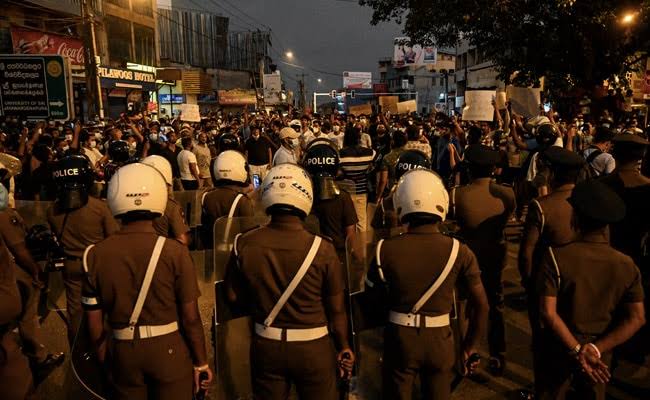
Unrest has continued in Sri Lanka over the weekend as protestors defied curfew to express frustration over fuel shortages and the nation’s worsening economic crisis.
All 26 cabinet ministers – aside from the president and his brother, the prime minister – tendered their resignations on Sunday as public dissent over the country’s dire financial situation continued.
President Gotabaya Rajapaksa introduced a state of emergency on Friday, with a curfew and social media blackout set over the weekend in an attempt to quell rising public dissent and halt planned protests, after a crowd attempted to storm the president’s home in the capital of Colombo.
The country has been suffering from a worsening economic crisis over the past few years due to a foreign exchange shortage that was exacerbated by the economic impacts of the Covid-19 pandemic. This has rendered the country unable to pay for fuel, food, medicine and other essentials, with the population of 22 million facing blackouts that have lasted as long as 13 hours each day, and led to protests at empty gas stations in the country.
Over the past two years, Sri Lanka’s foreign exchange reserves have dropped by 70%, with government action blamed by many for the nation’s economic instability, with the hashtag ‘GotaGoHome2022’ trending on Twitter, abbreviating the president’s first name. Public opinion has turned decidedly against Rajapaksa, following his election in 2019.
The current administration has responded to the situation calling for unity and cooperation.