
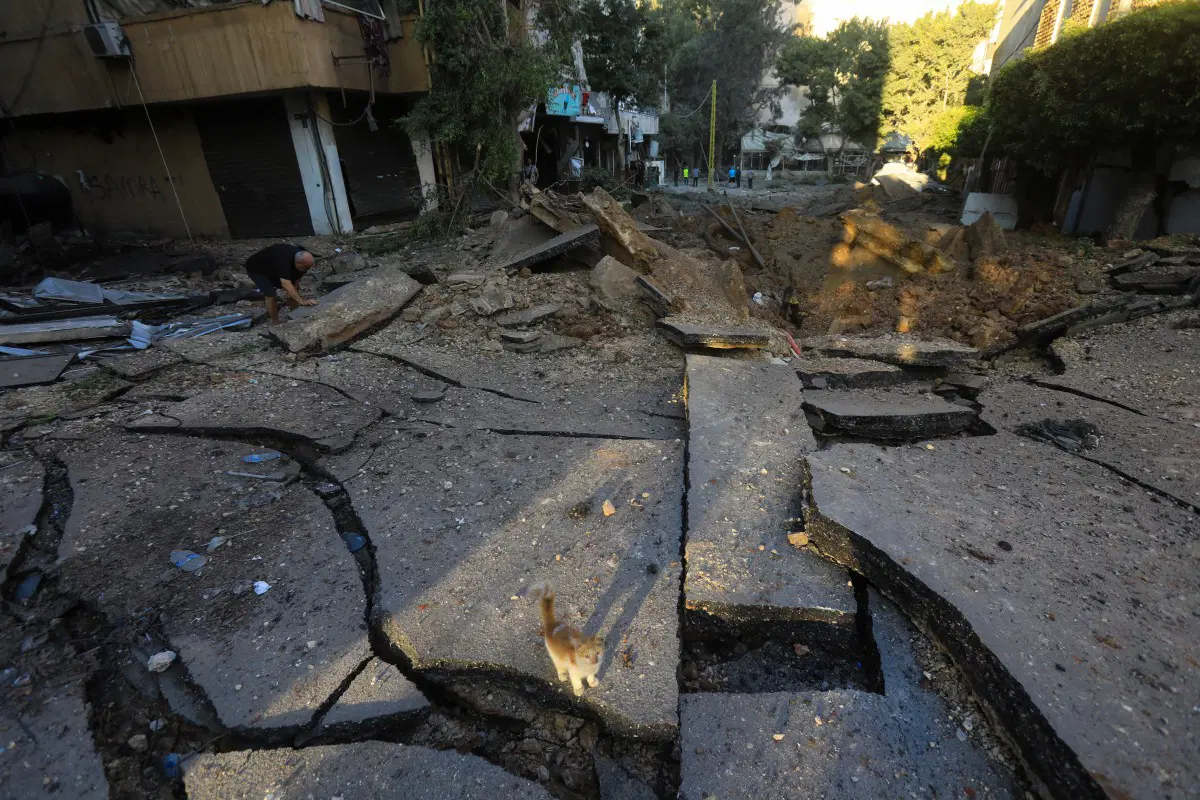
Fatima Samuella Tholley, a 27-year-old housekeeper from Sierra Leone, had dreams of returning home to escape the violence in southern Lebanon. But when an Israeli airstrike killed her employer and destroyed her belongings, those hopes were shattered.
With just a change of clothes in a plastic bag, Fatima and her cousin, also a housekeeper, made their way to Beirut in an ambulance. Terrified and disoriented, they found themselves in the chaos of the bombed city, a place they only knew from the airport where they’d arrived months earlier.
“We don’t know if we’ll live or not. Only God knows,” Fatima said during a tearful video call. She added that they had no passports, no documents—everything was lost in the attack.
For days, the cousins have been sheltering in a cramped storage room in an empty apartment, offered to them by a stranger. With no access to news and unable to speak Arabic or French, they can only watch the bombings from their window.
Since mid-September, violence has surged in Lebanon, with over 1,000 dead as Israel strikes Hezbollah strongholds. The situation is especially dire for migrant workers like Fatima, whose legal status is tied to their employer under the exploitative “kafala” system, which often involves withholding wages and seizing passports.
“We had to give our passports to our madams when we arrived. Now, everything is gone. Even our madams didn’t survive,” said 29-year-old Mariatu Musa Tholley, Fatima’s cousin.