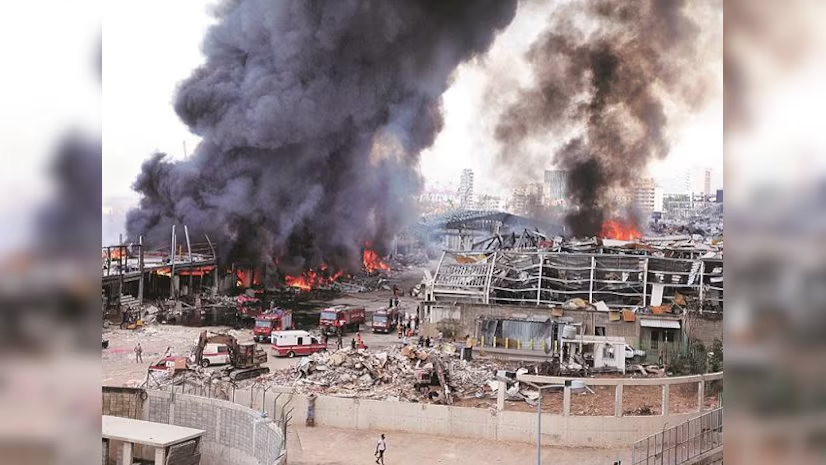
The conflict between Israel and Iran has intensified, with cross-border hostilities escalating sharply. Israeli forces unleashed a fresh wave of strikes on Hezbollah positions in Beirut and southern Lebanon on Sunday, marking what military analysts describe as one of Israel’s heaviest bombardments since the conflict began. Sparks from the strikes could be seen from several kilometers away, signaling the scale of the attack. This escalation comes on the one-year anniversary of Hamas’ surprise assault on Israel, an event that triggered the ongoing war.
Meanwhile, Hezbollah retaliated with rocket strikes on Haifa, Israel’s third-largest city, late Sunday. The barrage caused damage across the city, leaving at least 10 dead and injuring several others. In Tiberias, another coastal town, more rockets landed, wounding civilians. Israel’s air defenses, usually reliable, failed to intercept some of these projectiles, leading to widespread destruction.
Hezbollah has shown no sign of retreat, despite the battering it’s receiving from Israel’s military. The armed group vowed to continue its resistance, firing more than 135 rockets into northern Israel. The group claimed its attacks targeted military bases, specifically a base south of Haifa, in retaliation for Israel’s earlier strikes that killed its leader, Hassan Nasrallah, a month ago.
In the midst of this violence, the humanitarian situation worsens. Filippo Grandi, head of the United Nations refugee agency, condemned Israel’s strikes on Lebanon, calling them violations of international law, with civilian infrastructure being hit. He urged both sides to cease the violence immediately.
A year into this brutal conflict, both Israel and Hezbollah remain entrenched, their firepower more devastating than ever. The Middle East is teetering on the edge of a larger, more destructive war, as the violence refuses to subside. The toll is growing, and the cycle of retribution seems unbreakable.
Top of Form