
By the NNH Editorial Team
Dhaka
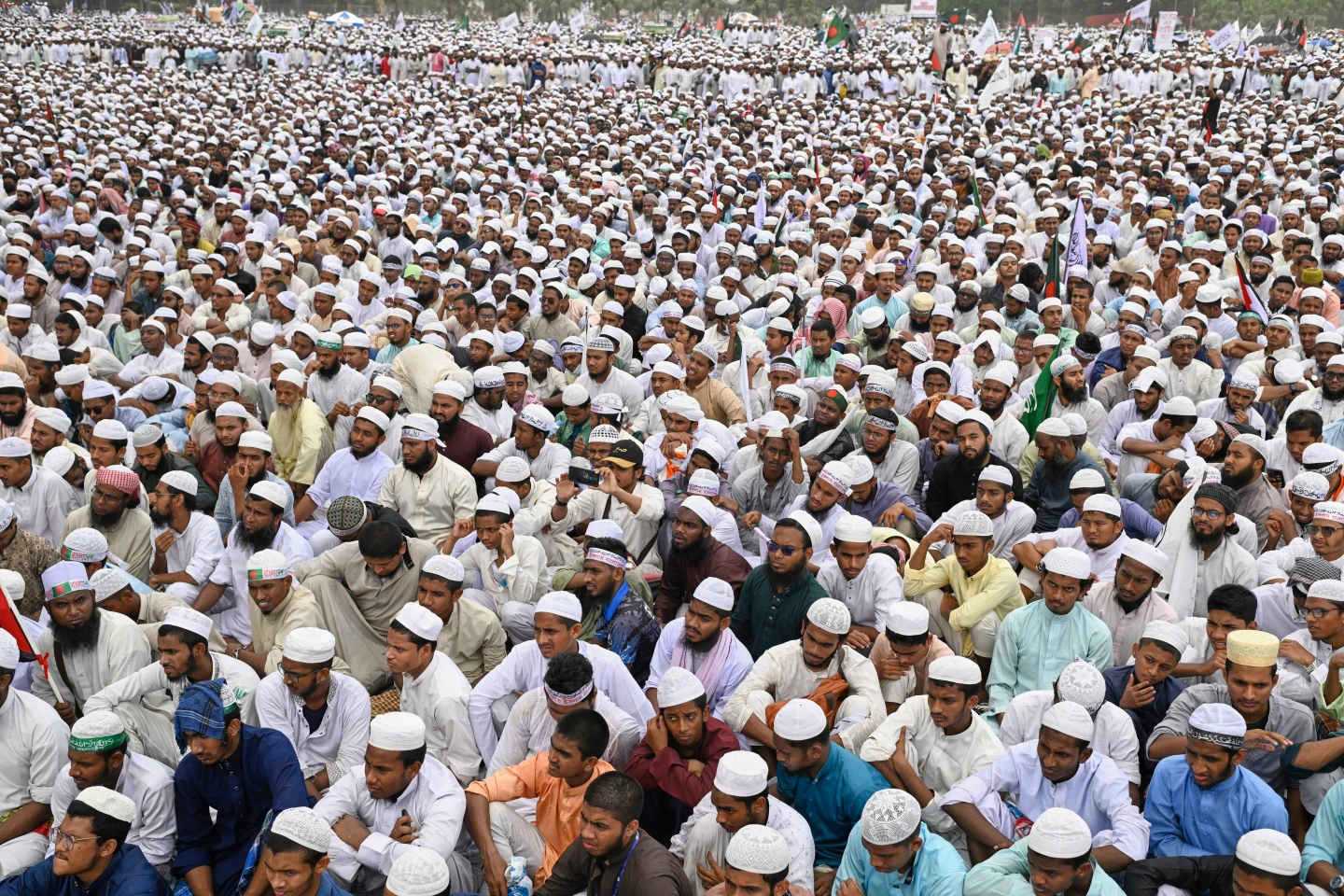
More than 20,000 supporters of the hardline group Hefazat-e-Islam flooded the streets of Dhaka on Saturday, rallying against proposed reforms that would expand legal rights for women in Bangladesh.
The protests, marked by chants and placards rejecting “Western laws,” were triggered by a package of recommendations from the interim government, which include equal inheritance rights for women, a ban on polygamy, and the formal recognition of sex workers as part of the labour force.
Speaking at the demonstration, Hefazat leader Mamunul Haque warned that the proposals “undermine Islamic principles” and threatened nationwide protests if the government fails to withdraw them by May 23.
Post-Hasina Politics and Rising Religious Tensions
The rally comes as Bangladesh navigates a delicate transition following the resignation of Prime Minister Sheikh Hasina last year. Her departure under pressure from mass protests led to the formation of an interim government headed by Nobel Peace laureate Muhammad Yunus and backed by the military.
Since taking office, the Yunus administration has taken steps seen as appeasing Islamist groups. These include lifting a ban on the country’s largest Islamist party and designating Hasina’s student wing, the Bangladesh Chhatra League, a “terrorist organization.”
Analysts say Hefazat’s renewed visibility reflects a broader trend: the rise of conservative religious forces in a country historically anchored in secularism.
Elections Pending as Constitution Comes Under Scrutiny
The interim government, facing growing demands for a return to democratic rule, has hinted that elections may be held by late 2025 or early 2026. Yunus has also signaled potential amendments to the constitution, though specifics remain unclear.
As the political climate shifts, questions are growing over whether Bangladesh can maintain its secular commitments while balancing rising religious influence — especially on issues as sensitive as gender equality.
With its population of over 170 million — and the world’s fourth-largest Muslim demographic — Bangladesh now finds itself at a crossroads between modern reform and conservative pushback.