By NNH News Corp Editorial Desk | Abuja | October 2025
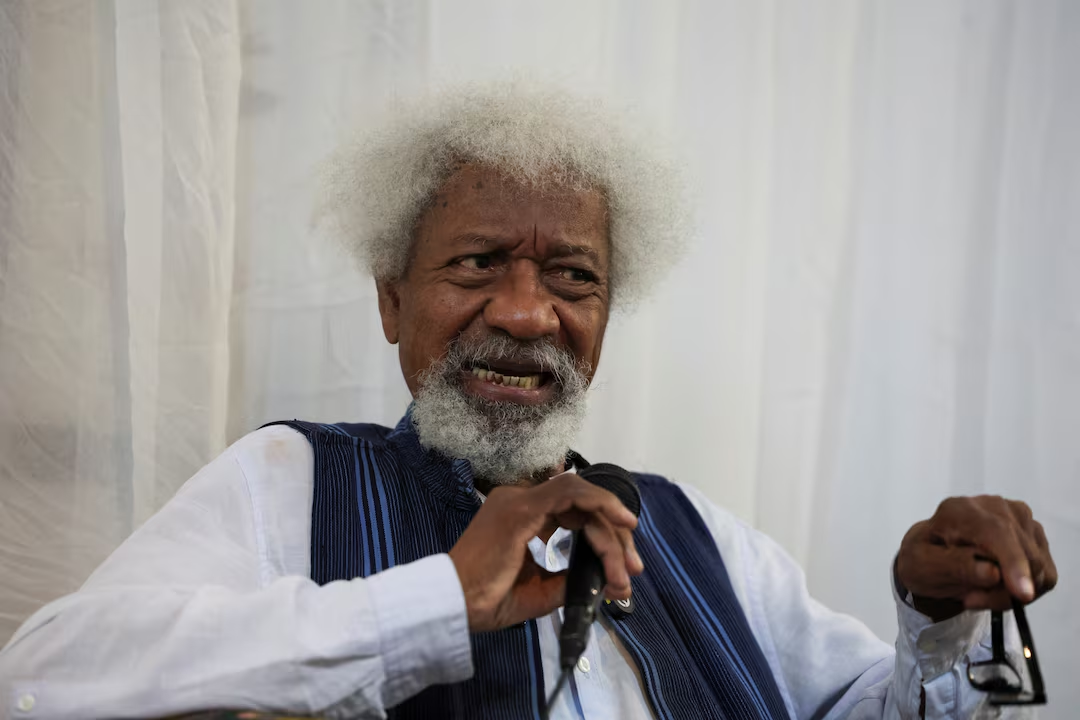
The United States has revoked the visa of Nigeria’s Nobel Laureate, Prof. Wole Soyinka, according to a letter reportedly issued by the U.S. Consulate General in Lagos and dated October 23, 2025.
The letter, which Soyinka shared publicly, indicates that his B1/B2 non-immigrant visa — issued on April 2, 2024 — was revoked pursuant to Title 22, Code of Federal Regulations, Section 41.122. That regulation empowers U.S. consular officers to withdraw a visa “at any time” if new or additional information arises after issuance.
“I have no visa; I am banned, obviously, from the United States,” Soyinka said. “No reason was given. I have done nothing new.”
Legal Context
Under U.S. law, 22 CFR 41.122 gives consular officers wide discretion to revoke visas. Grounds for such action include newly obtained information, updated security data, or any change that may affect the traveler’s eligibility under the Immigration and Nationality Act. The regulation does not compel the United States to disclose the specific reasons publicly, especially when national security, public interest, or sensitive records are involved. In most cases, revocation renders the visa immediately void, but it does not always amount to a permanent ban; affected individuals may reapply subject to eligibility reviews.
No Official Statement Yet
When contacted by journalists, the U.S. Embassy in Nigeria and the Department of State’s Bureau of Consular Affairs declined immediate comment. As of press time, no official explanation had been released to clarify the nature or cause of the revocation.
Reactions and Perspective
The news has sparked wide debate across social and political circles in Nigeria. Some observers view it as a procedural enforcement of American immigration law, while others see it as an unexpected diplomatic moment involving one of Africa’s most distinguished writers. Soyinka, 90, remains a towering literary and civic figure whose global engagements have often intersected with political discourse. The development, however, appears to fall strictly within the ambit of U.S. consular authority rather than any formal diplomatic sanction.
Editorial Note
The revocation of visas under U.S. law is not unusual and can occur without public explanation. The cited regulation—22 CFR 41.122—underscores America’s sovereign right to manage entry decisions based on evolving information, security updates, or administrative discretion. Until an official statement emerges, the reasons behind Prof. Soyinka’s case remain undisclosed.