
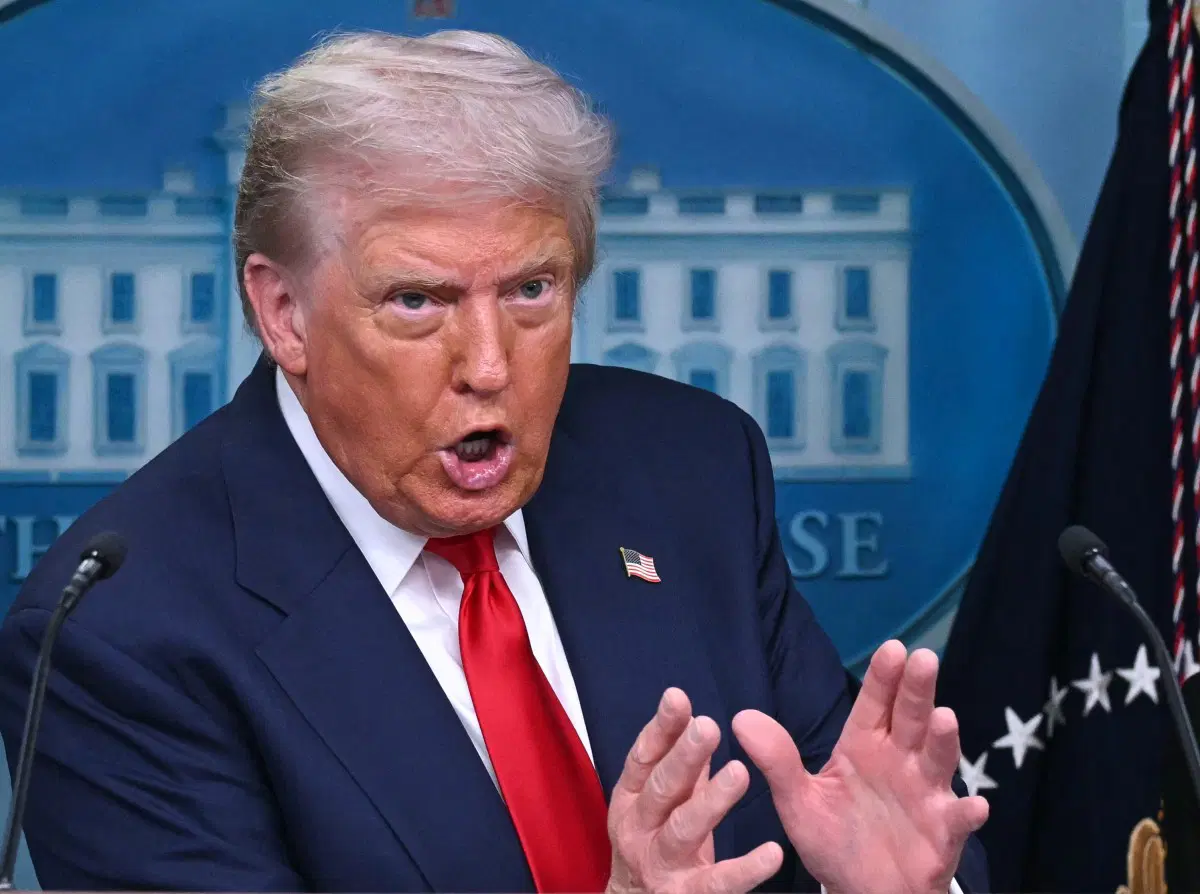
U.S. President Donald Trump has threatened possible military action against Nigeria, alleging that Christians in the country are being subjected to widespread killings.
In a post on his Truth Social platform on Saturday, Trump accused the Nigerian government of allowing what he described as “the mass slaughter of Christians” and warned that the United States might intervene militarily if the situation persists.
“If the Nigerian Government continues to allow the killing of Christians, the U.S.A. will immediately stop all aid and assistance to Nigeria, and may very well go into that now disgraced country, ‘guns-a-blazing,’ to completely wipe out the Islamic terrorists who are committing these horrible atrocities,” Trump wrote.
He added that he had directed the “Department of War” to prepare for possible action, saying any attack would be “fast, vicious, and sweet.”
The former president, who has repeatedly positioned himself as a defender of global Christianity, said the killings pose an “existential threat” and urged U.S. lawmakers to investigate what he termed “mass slaughter.”
On Friday, Trump also labeled Nigeria a “country of particular concern” — a U.S. State Department designation for nations accused of severe violations of religious freedom.
Reacting to Trump’s remarks, President Bola Tinubu rejected the characterization of Nigeria as a nation hostile to religious freedom, stressing that the country “remains committed to protecting the rights of citizens of all faiths.”
“Religious freedom and tolerance have been a core tenet of our collective identity and shall always remain so. Nigeria opposes religious persecution and does not encourage it,” Tinubu said in a statement.
Nigeria, Africa’s most populous nation, has long struggled with complex conflicts driven by a mix of ethnic, economic, and religious factors. Experts note that violence in parts of the country has claimed lives across both Christian and Muslim communities, complicating attempts to frame the crisis along purely religious lines.
Trump’s comments have stirred diplomatic unease, with analysts warning that such rhetoric could inflame tensions in a country already divided between its Muslim-majority north and largely Christian south.