
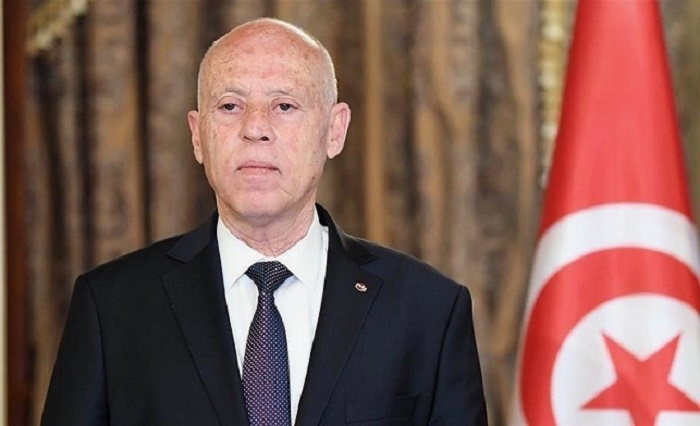
Tunisia will hold a constitutional referendum for a “new republic” on July 25, according to President Kais Saied, defying critics who say he wants to establish an autocracy.
The vote will take place exactly a year after Saied dismissed the government and suspended parliament, actions that his opponents labeled as a coup, but which he claims were necessary to break a crippling political deadlock.
Saied has since held a public consultation on a new constitution, which has been widely boycotted.
He has also appointed a committee to recommend how the results of the consultation should be incorporated into the replacement constitution for Tunisia’s 2011 revolution, the birthplace of the Arab Spring.
The draft is expected to be completed by June 30.
Tunisia’s official journal set the date for a vote on the question, “Do you support the new draft constitution for the Tunisian republic?” late Wednesday.
Saied has also stated that parliamentary elections will be held in December, following the dissolution of the previous legislature, which was dominated by his arch-enemy, the Islamist-inspired Ennahdha.
Former law professor has long advocated for a presidential system to replace the hybrid structure outlined in a 2014 constitution, which allowed for frequent clashes between the executive and legislative branches.
He has also called for a “national dialogue,” but political parties have been excluded from the process.
The powerful trade union confederation Union Générale Tunisienne du Travail has said it will not participate because the dialogue excludes key political actors and seeks to “impose faits accomplis by force.”
Many Tunisians, tired of the country’s deepening economic crisis, have welcomed Saied’s moves against an unpopular political system that they claim has delivered little.
However, a decade after the revolt that deposed strongman Zine El Abidine Ben Ali, rights groups, political parties, and foreign governments have warned of a return to dictatorship.