
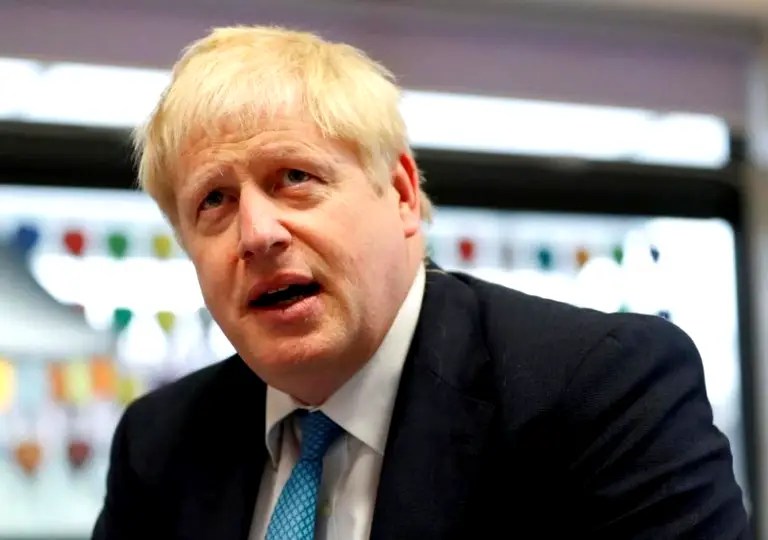
British Prime Minister Boris Johnson has agreed to resign, bringing an end to an unprecedented political crisis over his future that had paralyzed Britain’s government. On Thursday, his office made the announcement.
Boris Johnson, the British Prime Minister, has agreed to resign, his office announced Thursday, bringing an end to an unprecedented political crisis over his future that had paralyzed the British government.
An official in Johnson’s Downing Street office confirmed that the prime minister would resign later. Because the announcement had not yet been made, the official spoke on the condition of anonymity.
Johnson had resisted calls from his Cabinet to resign in the aftermath of ethics scandals. He caved after over 40 ministers quit his government and told him to leave.
It was unclear whether Johnson would remain in office while the Conservative Party selects a new leader to succeed him as Prime Minister.
Just minutes before the news broke, Treasury Secretary Nadhim Zahawi called on Prime Minister Boris Johnson to resign, just 36 hours after Johnson appointed him, and another newly appointed Cabinet minister resigned.
Johnson knew “the right thing to do” was to “go now,” according to Zahawi.
Zahawi was appointed late Tuesday to replace Rishi Sunak, who resigned after a series of ethics scandals forced him to abandon Johnson.
Michelle Donelan, the Education Secretary who was appointed on Tuesday after her predecessor resigned, announced her resignation on Thursday morning.
Johnson had resisted calls to resign, digging in his heels even as dozens of officials resigned and previously loyal allies urged him to step down after yet another scandal engulfed his leadership.
Previous reporting: Boris Johnson’s colorful politics fray at the edges. Is he, however, out?
More: What we know about Boris Johnson and the ‘partygate’ scandal in Britain
Johnson’s most trusted Cabinet ministers paid him a visit at his Downing Street office on Wednesday, telling him to step down after losing the trust of his party. However, Johnson chose to fight for his political career and fired one of the Cabinet members, Michael Gove, according to British media.
It is unusual for a prime minister to cling to power in the face of such intense pressure from his Cabinet colleagues. On Thursday, the front page of the Guardian dubbed him “desperate, deluded.”
“He’s breached the trust that was put in him. He needs to recognise that he no longer has the moral authority to lead. And for him, it’s over,” Scottish National Party leader Ian Blackford told The Associated Press.
Boris Johnson is attempting to retain his position as Prime Minister of the United Kingdom. Here are some images from his career.
Johnson, 58, was well-known for his ability to wiggle out of tight spots. He remained in power despite allegations that he was too close to party donors, that he shielded supporters from bullying and corruption allegations, and that he lied to Parliament and the public about government office parties that violated pandemic lockdown rules.
However, recent revelations that Johnson was aware of sexual misconduct allegations against Chris Pincher, a Conservative lawmaker, before promoting him to a senior position, proved to be the final straw.
Pincher resigned as deputy chief whip last week following allegations that he groped two men at a private club. This prompted a flurry of reports about previous allegations leveled against Pincher, as well as shifting government explanations about what Johnson knew when he appointed him to a senior position enforcing party discipline.
Health Secretary Sajid Javid and Treasury Secretary Rishi Sunak both resigned in the aftermath of the scandal on Wednesday. The two Cabinet heavyweights were in charge of dealing with two of Britain’s most pressing issues: the cost-of-living crisis and COVID-19.
The movement for more inclusive and equitable healthcare
Many lawmakers agreed with Javid when he said Johnson’s actions threaten the integrity of the Conservative Party and the British government.
“At some point we have to conclude that enough is enough,” he told fellow lawmakers Wednesday. “I believe that point is now.