
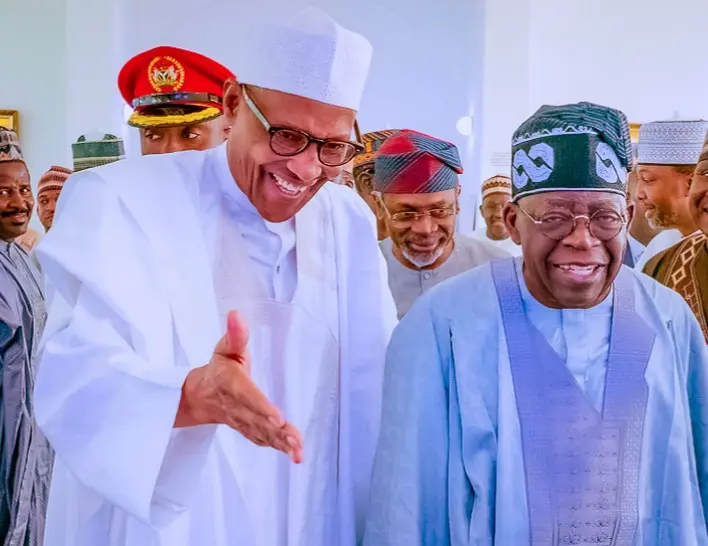
In his farewell address, President Muhammadu Buhari expressed his apologies to the Nigerian people for some of the decisions he made during his tenure that caused pain and suffering.
As he handed over the reins to President-elect Asiwaju Bola Tinubu, Buhari commended himself, stating that he is leaving Nigeria in a better state than when he assumed office in 2015.
Buhari acknowledged his administration’s inability to rescue all the children who are still in captivity, expressing his grief and solidarity with the parents and relatives of those who lost loved ones due to senseless violence.
Despite these challenges, he highlighted the progress made in reducing banditry, terrorism, armed robbery, and other criminal activities during his term.
As Tinubu takes office, expectations are high, with various groups outlining their demands.
The Yoruba Council of Elders called for immediate restructuring of the country, while the Catholic Bishops Conference of Nigeria praised Buhari’s infrastructure projects but criticized his handling of insecurity.
Chief Edwin Clark, an elder statesman, went so far as to label Buhari as Nigeria’s worst president.
Ahead of Tinubu’s tenure, the Nigeria Union of Petroleum and Natural Gas Workers (NUPENG) advised against hastily removing the subsidy on petrol due to its socio-economic implications.
The Nigeria Labour Congress (NLC) cautioned Tinubu about potential labor challenges, as they claimed that many industrial disputes were left unresolved by Buhari.
In his farewell speech, Buhari called on Nigerians to unite and work together for the betterment of the country.
He extended his congratulations and support to President-elect Tinubu, highlighting Tinubu’s passion for excellence, commitment to equity, and desire to elevate Nigeria on the global stage.
Assessing Buhari’s tenure, the Catholic Bishops expressed dissatisfaction with his handling of insecurity, noting the rise of Boko Haram, banditry, and Fulani herdsmen during his presidency.
However, they commended him for the completion of the Second Niger Bridge and the establishment of Lux Mundi University.
The bishops emphasized the significance of expanding tertiary education to accommodate the growing number of university admission seekers.
Despite mixed opinions on his performance, Buhari’s completion of infrastructure projects, including the Second Niger Bridge, was acknowledged.
The progress made on federal roads, such as the Enugu-Port Harcourt highway, was also recognized.
In conclusion, President Buhari bid farewell to Nigerians, expressing his belief that Nigeria is in a better state in 2023 compared to 2015.
As the nation transitions to a new leader, the challenges of insecurity, economic stability, and unity remain at the forefront.