
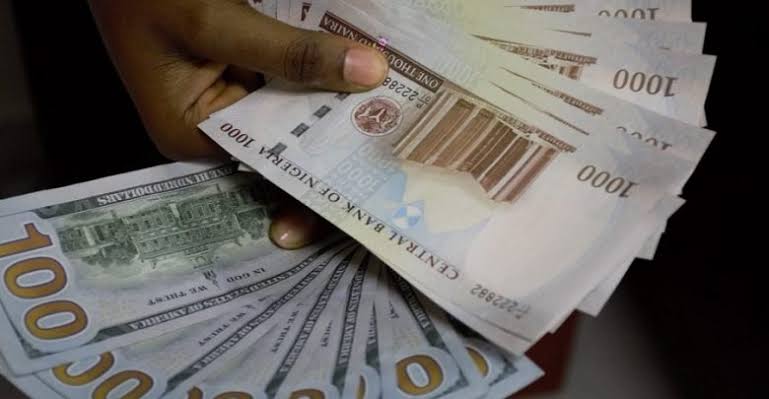
In a significant move, the Central Bank of Nigeria has reportedly devalued the country’s currency, the Naira, to N640 per dollar.
This comes as a stark contrast to the previous day’s rate of N461.6 at the Importers and Exporters (I&E) window.
The decision to devalue the Naira comes shortly after President Bola Tinubu’s announcement of plans to unify the country’s exchange rate as a means to stimulate the economy.
The large disparity between the I&E window and the parallel market, commonly known as the “black market,” has led to round-tripping activities involving Bureau de Change operators.
CBN Governor Godwin Emefiele discussed the exchange rate issue with Tinubu during a meeting on Tuesday, May 30.
Following this meeting, the apex bank conducted its weekly bidding for foreign exchange and sold the spot rate to banks on behalf of their customers at N631 per dollar.
Remarkably, most bidders were able to obtain the full amount they requested.
A customer revealed that their request was granted at N631 instead of the previous rate of N461.6. Consequently, this move has led to a decline in prices at the parallel market.
In Abuja and Kano, prices dropped from N750 per dollar in the early hours of the previous day to N745 by the evening.
Between 2020 and 2022, the CBN reportedly spent approximately $42 billion in interventions in the foreign exchange market to stabilize the Naira.
These interventions were carried out by selling the currency at official rates to end-users, including students and tourists.
However, the official rates significantly differ from the effective exchange rate of the Naira.
The Financial Stability Report, a publication by the CBN, states that the apex bank sold $9.2 billion in the market during the first half of last year.