
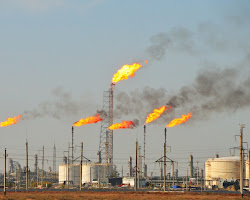
Despite the Federal Government’s commitment to achieving zero gas flaring by 2060, there has been an unfortunate 10 percent increase in gas flaring year-on-year, reaching 138.7 million metric standard cubic feet (MSCF) in the first half of 2023, compared to 126.1 MSCF in the same period of 2022.
The flared gas’s value amounted to $485.3 million, equivalent to N373 billion at the current exchange rate. The National Oil Spill Detection and Response Agency (NOSDRA) revealed that oil-producing companies responsible for the flaring would be liable to pay $277.3 million (N213 billion) for violating gas flaring laws during this period.
Unfortunately, the likelihood of these penalties being paid promptly is slim, as there are already several billions of dollars in outstanding fines against the companies from previous flaring incidents.
The gas flared during the period released a staggering 7.4 million tonnes of carbon dioxide emissions, an amount that could have generated 13,900 gigawatts of electricity per hour if utilized.
Despite ongoing efforts to reduce gas flaring since the 1950s, it continues to be a significant environmental concern, releasing harmful gases into the atmosphere.
Recognizing the gravity of the issue, the House of Representatives has initiated a probe into the $2.5 billion annual loss caused by gas flaring. The newly inaugurated Ad hoc Committee aims to investigate the root causes and recommend measures to put an end to this detrimental practice.
The Speaker of the House, Tajudeen Abbas, highlighted that gas flaring not only results in lost revenue but also has dire effects on the environment, affecting soil, water, and wildlife.
On a positive note, the Nigerian Upstream Petroleum Regulatory Commission (NUPRC) CEO, Gbenga Komolafe, emphasized that the Petroleum Industry Act (PIA) includes provisions to end gas flaring, with high penalties against flouting the regulations. Additionally, the Nigerian Gas Flare Commercialisation Programme (NGFCP) aims to work towards the elimination of gas flaring.