
Monkeypox could be the next coronavirus and scientists are working hard to find a cure.
 The spread of the disease in some European countries is the most recent source of concern among countries.
Around 100 cases had been confirmed or suspected in Europe by the weekend.
As a result, the disease is one of Google’s most searched topics.
According to a World Health Organization (WHO) statement, scientists are investigating the outbreak, and more cases are expected to be reported as surveillance expands.
Hans Kluge, a top European health official, has warned that cases of the rare monkeypox virus could increase in the coming months.
 WHO also stated that the recent outbreaks reported in the United States, United Kingdom, Australia, and several European countries are unusual because they occur in non-endemic countries.
“There have been about 80 confirmed cases so far, with another 50 under investigation.” “As surveillance expands, more cases are likely to be reported,” the WHO noted.
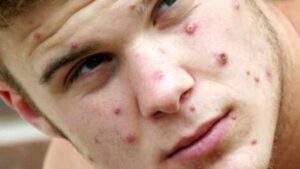
Fever, muscle aches, and swollen lymph nodes are common symptoms of Monkeypox. Rashes resembling chickenpox can also be found on the hands and face.
According to the WHO, transmission occurs primarily through close contact with infected animals such as rodents and monkeys and is limited to humans.
According to the Centers for Disease Control and Prevention, anyone can spread monkeypox through contact with body fluids, monkeypox sores, or shared items (such as clothing and bedding) contaminated with a person’s monkeypox fluids or sores.
 The US Health and Human Services Department added that household disinfectants can kill the virus on surfaces. Monkeypox has only been fatal in a few instances.
Experts recommend that anyone who is at high risk of contracting monkeypox isolate themselves for 21 days.
 Contacts are also advised to provide their contact information for contact tracing, to avoid travel, and to avoid contact with immunocompromised people, pregnant women, and children under the age of 12.