
By NNH News Desk
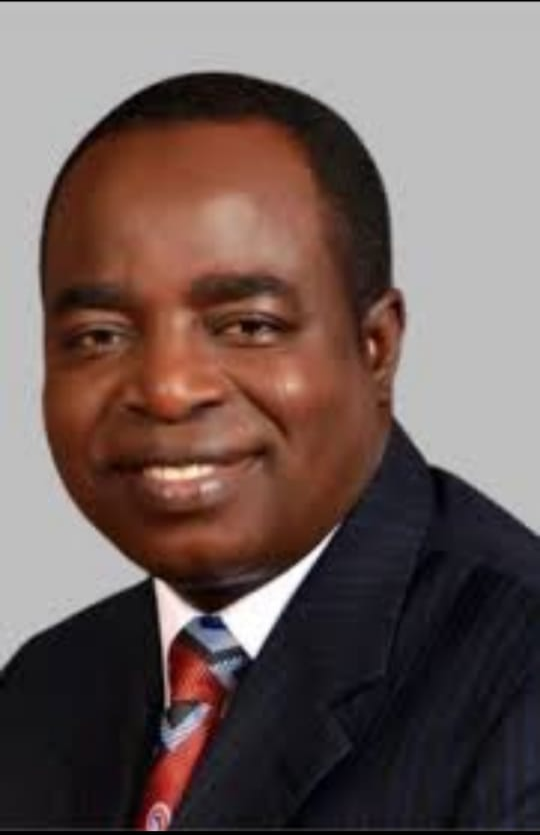
Abuja, Nigeria — Nigeria’s recent invitation to join the Financial Action Task Force (FATF) Style Regional Bodies (FSRB) Guest Initiative has drawn renewed attention to the country’s multi-year efforts to strengthen its anti-money laundering (AML) and counter-terrorist financing (CFT) framework. The development comes at a time of renewed institutional leadership, with Hon. Kayode Oladele assuming acting leadership of the Federal Character Commission (FCC) — a pivotal constitutional agency responsible for promoting equity and fairness in federal appointments and resource distribution.
The FATF invitation means Nigeria will now participate in global AML/CFT conversations under its own flag, rather than as part of the GIABA delegation. Hon. Oladele, a former Chairman of the House Committee on Financial Crimes, praised the Tinubu administration for reviving the reform agenda and supporting the Nigerian Financial Intelligence Unit (NFIU) in addressing long-standing compliance gaps.
Reflecting on the long journey, Oladele acknowledged the combined efforts of both chambers of the National Assembly, noting the significance of several key legislative actions that created the foundation for Nigeria’s improved global standing. These included:
– The NFIU Act,
– The Mutual Legal Assistance in Criminal Matters Act,
— and importantly, laws passed through the Senate under the leadership of reform-minded legislators.
Among the most notable was Senator Suleiman Abdu Kwari, then Chairman of the Senate Committee on Anti-Corruption and Financial Crimes, who sponsored and steered the passage of:
– The Proceeds of Crime (Recovery and Management) Act,
– The Money Laundering (Prevention and Prohibition) Act, and
– The Terrorism (Prevention and Prohibition) Act.
These laws were signed into effect by former President Muhammadu Buhari and significantly advanced Nigeria’s ability to investigate, prosecute, and recover illicit funds in line with FATF standards.
A critical policy moment in this legislative journey was the proposal from the executive branch to establish a standalone Money Laundering Control Bureau. However, in a coordinated response involving legislative consultation, it was agreed that empowering the Special Control Unit Against Money Laundering (SCUML) within the EFCC would be a more efficient and effective approach — avoiding unnecessary duplication and bureaucratic expansion.
Ashley Emenike, former advisor to Senator Kwari during the 9th Senate, noted:
“This was a prime example of synergy between the executive and legislature. By strengthening SCUML within the EFCC, Nigeria created a leaner, more functional framework that met international expectations and improved local enforcement capacity.”
Emenike added that while Nigeria has made substantial progress, the final leg of the reform journey lies in the passage of the Witness Protection Bill, currently before the House of Representatives and awaiting Senate concurrence.
“Witness protection is the pillar that sustains convictions and protects those who stand up for justice. It’s time to complete that circle,” he said.
As Hon. Oladele assumes his new role at the FCC, expectations are high that he will apply the same reform-oriented lens to Nigeria’s equity framework. Stakeholders are calling for:
– Real-time digital compliance tools to monitor adherence to federal character principles,
– Strengthened coordination with institutions such as the FCSC, INEC, and NUC,
– And a publicly accessible Federal Equity Dashboard that promotes transparency and public trust.
This moment — combining global acknowledgment of Nigeria’s anti-graft reforms and renewed domestic leadership — is seen as a rare opportunity to institutionalize fairness, equity, and accountability across all levels of governance.