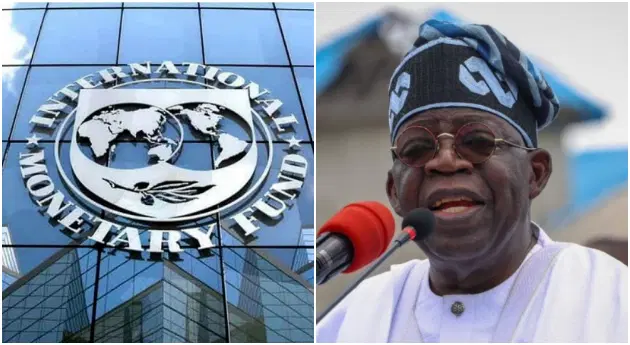
The International Monetary Fund (IMF) has revised upward its forecast for Nigeria’s economic growth, projecting a 3.4% expansion in 2025, according to its July 2025 World Economic Outlook (WEO). This marks a 0.4 percentage point increase from its April projection of 3.0%.
The global lender also boosted Nigeria’s 2026 growth forecast to 3.2%, up from 2.7% in April — a 0.5 percentage point increase.
The improved projections reflect broader optimism in the global economy, with the IMF upgrading its 2025 global growth estimate to 3.0% (up 0.2 points) and 2026 to 3.1% (up 0.1 points).
For Sub-Saharan Africa, the outlook is similarly upbeat. Growth in the region is now expected to reach 4.0% in 2025 and 4.3% in 2026 — representing slight upgrades from the previous 3.8% and 4.2% forecasts, respectively.
“Growth is expected to be relatively stable in 2025 in sub-Saharan Africa at 4.0 percent, before picking up to 4.3 percent in 2026,” the WEO stated.
Drivers and Risks
IMF Chief Economist Pierre-Olivier Gourinchas attributed the improved global outlook to stronger-than-expected early-year growth, looser financial conditions, and some fiscal expansion. A weaker U.S. dollar and lower-than-anticipated tariff rates have also contributed to the shift.
Still, Gourinchas warned that risks to the global economy remain tilted to the downside.
“A breakdown in trade talks, renewed protectionism, or tightening financial conditions could all hamper growth,” he said. “Geopolitical tensions and fiscal vulnerabilities are persistent threats, even as some positive surprises — such as trade breakthroughs or productivity gains — remain possible.”
Policy Recommendations
The IMF advised national governments to embrace prudent, confidence-boosting reforms, including clear trade rules, fiscal consolidation where necessary, and safeguarding central bank independence.
“Reducing policy uncertainty is essential. Countries must restore fiscal buffers, maintain financial stability, and implement reforms to support long-term productivity,” Gourinchas added.
The Fund also reiterated its support for exchange rate flexibility, with targeted interventions allowed under its integrated policy framework.
The revised outlook comes as Nigeria continues efforts to stabilise its macroeconomic environment, curb inflation, and attract investment following sweeping policy shifts under the Tinubu administration.
Let me know if you’d like this localized further or condensed for publication.