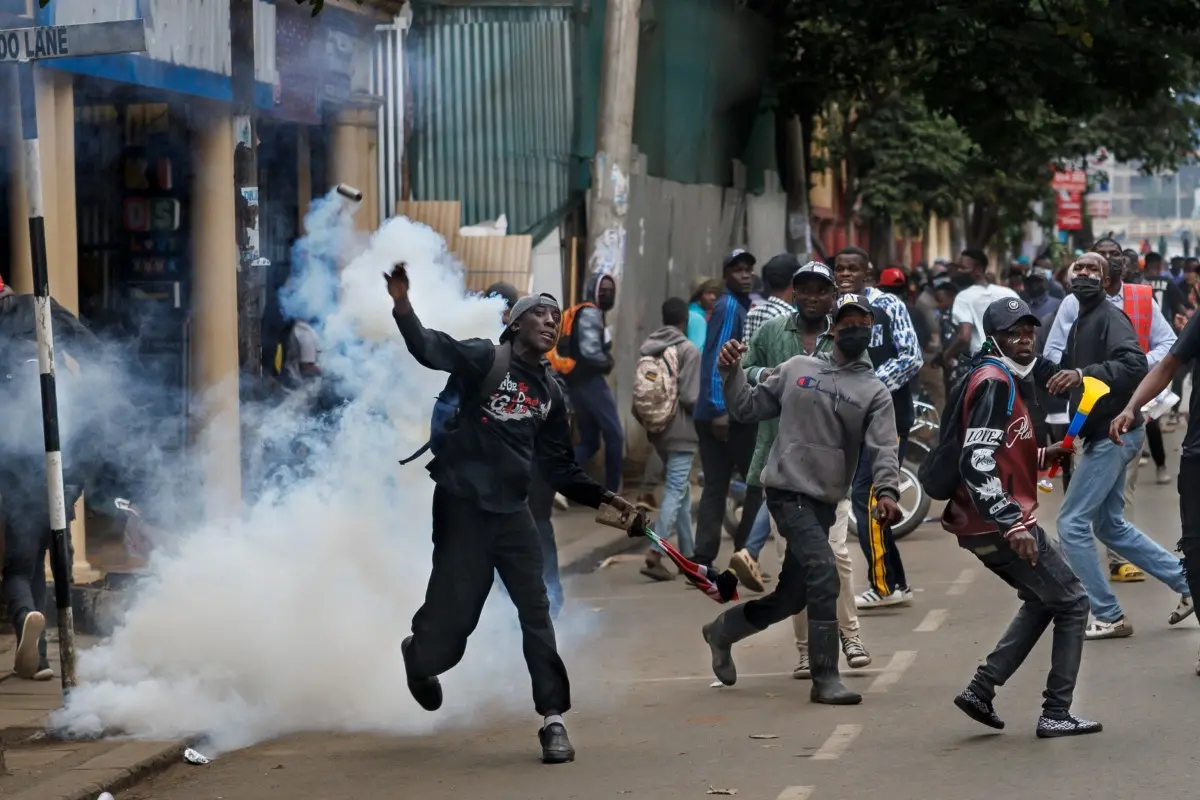
In Kenya’s capital, Nairobi, police used tear gas and water cannon against demonstrators on Tuesday, as rallies across the country called for President William Ruto to step down. These protests, led by young Gen-Z activists, began a month ago in response to unpopular tax hikes, which Ruto has since abandoned due to the ensuing violence.
Despite a decrease in street protests since the late June incidents that saw dozens killed and parliament stormed, demonstrators continue to demand Ruto’s resignation, utilizing the hashtag “RutoMustGo.” In Nairobi’s central business district (CBD), heavily armed police clashed with small groups of protesters, employing tear gas and water cannons.
Protester Kinuthia Ndung’u criticized the police for their “excessive force,” highlighting that many young people were injured despite the peaceful nature of the demonstrations. Another protester, Francis Mumo, questioned the police’s aggressive tactics, asserting the right to peaceful protest.
Local media reported at least one death amid the clashes in Nairobi’s Kitengela neighborhood. Protests also erupted in Kisumu, a stronghold of the opposition, where shops closed early as demonstrators took to the streets, and in Eldoret, a region supportive of the president. In Mombasa, protesters clashed briefly with police before marching into the city center, chanting slogans and carrying banners demanding justice and an end to police violence.
President Ruto has responded to the protests by withdrawing the proposed tax hikes and dismissing nearly his entire cabinet. However, these moves have not quelled public discontent over perceived mismanagement of public resources. Protester Maureen Nyaga expressed continued frustration, emphasizing that demonstrators are awaiting action to meet their demands.
Since the rallies began on June 18, the Kenya National Commission on Human Rights reported that 50 people have been killed and 413 injured. Rights groups accuse the police of using disproportionate force against protesters. Despite Ruto’s attempts at dialogue, the protests have evolved into a broader movement against his administration, calling for action against corruption and justice for victims of alleged police brutality.