
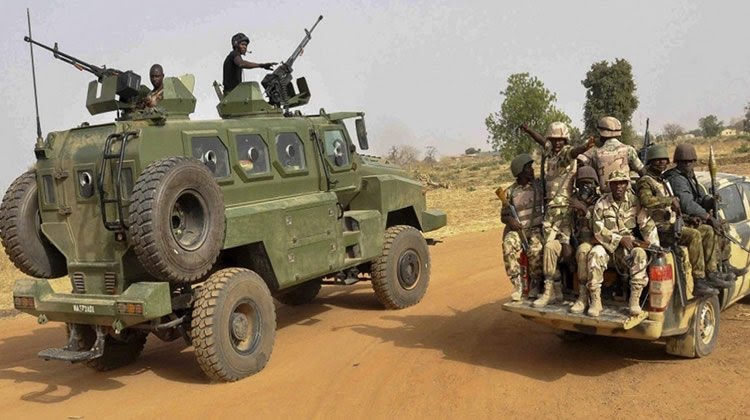
An unspecified number of soldiers were reportedly killed in a terrorist attack at the Zuma Rock Area Military Checkpoint FCT, Abuja on Thursday night before the military and police repelled the gunmen and took control of the area.
The area near Madalla town is a few meters away from Zuba on the Abuja-Kaduna highway.
According to a source, the attackers arrived at the scene shortly after 7 p.m. and opened fire immediately.
“They took control of the area for about 30 minutes and kept on shooting before heading towards Kaduna axis of the expressway,” the source said.
About 20 minutes after the terrorists left, soldiers from Zuma Barracks rushed to the scene and took full control.
A police patrol team also arrived.
The attack comes amid increased tensions in the Federal Capital Territory (FCT) over possible terrorist attacks.
Residents of Abuja have been concerned about security since the July 5 invasion of Kuje Prison in the nation’s capital.
Terrorists ambushed soldiers from the Presidential Guards Brigade on Sunday.
Following an attack by bandits in a nearby community, the management of Federal Government College, Kwali, asked parents to evacuate their children from the school 24 hours after the incident.
The FCTA and the Ministry of Education also ordered the closure of schools in the nation’s capital.
President Muhammadu Buhari, whom terrorists have threatened to kidnap, presided over a security meeting earlier on Thursday.
At the end of the meeting, National Security Adviser Babagana Monguno told journalists that the country was in a “very difficult situation.”
Monguno stated that the President was aware of people’s concerns about rising insecurity, adding that Nigerians were tired and turning to self-help.
Monguno said: “Today’s meeting was convened by the President, as a continuation of the meeting that took place last week to discuss the technical issues and the tasks that were given to the various security agencies. The meeting deliberated on all those issues, after the brief by the National Security Adviser, which is usually the procedure. Again, council deemed it necessary to inform the general public, that fighting this type of asymmetric conflict is a collective effort. It’s not something that should be confined to only the security, intelligence and law enforcement agencies.
“When we keep saying whole of society approach, whole of government approach, to get a whole of nation approach, what it means is that everybody has to partake in this enterprise. The truth is that no country can ever overcome the difficulties of an asymmetric conflict by virtue of the fact that the enemy of the state is embedded within the population within the wider society. It is true that the local people are averse, they’re scared, they’re worried and there’s no confidence. That is understandable. But without their support without the cooperation in terms of giving information, it makes it very hard for the operational elements.”
“A few days ago, troops of the guards brigade were ambushed and decimated. Had there been a collective effort by way of just snippets of information we might have averted that incident.”