NNH NEWS CORP
NNH WEEKEND INTELLIGENCE
Smart reads. Curious minds. Surprising science.
You’re not crazy.
You’re not weak.
You’re just… itching.
Let’s dive into the most underrated sensation in human history.
What Is an Itch?
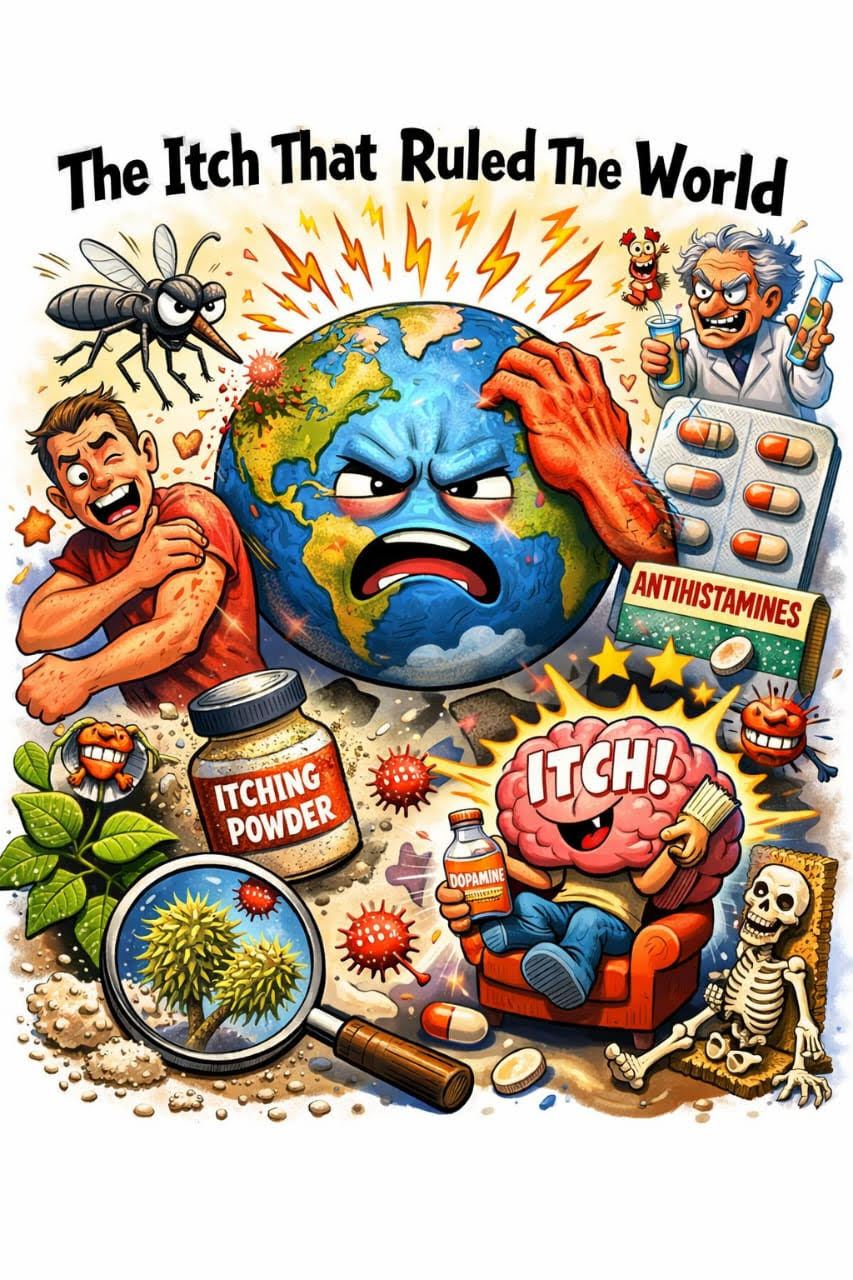
An itch (scientifically called pruritus) is a protective alarm system.
Your body is basically saying:
“Hey. Something is on you. Remove it. Immediately.” Unlike pain (which screams “STOP!”), itch whispers:
“Scratch me… just a little…”
Itch is triggered by special nerve fibers in your skin called C-fibers. These nerves send signals up your spinal cord to the brain’s sensory and emotional centers.
Fun fact:
Itch and pain share similar neural pathways — but itch is its own distinct sensation.
How Is It Triggered?
Here’s what can set it off:
1. Histamine Release
When a mosquito bites you, your immune cells release histamine — a chemical that:
- Dilates blood vessels
- Causes redness
- Activates itch nerves
Your body is basically overreacting to the bite.
2. Irritants
Poison ivy
Rough fabric
Detergents
Dry skin
All can activate itch receptors.
3. Internal Causes
Liver disease
Kidney failure
Hormonal changes
Certain medications
Sometimes the itch isn’t even on the skin — it’s systemic.
Why Does Scratching Feel So Good?
Now this is the wild part.
When you scratch:
- You create mild pain
- That pain temporarily overrides the itch signal
- Your brain releases dopamine
Yes. Dopamine.
Scratching is basically a socially acceptable micro-addiction.
You’re rewarding yourself for damaging your own skin slightly.
That relief?
It’s a neurochemical high.
But here’s the trap:
Scratching can cause inflammation… which releases more histamine… which makes you itch more.
The itch–scratch cycle is real.
Has Itch Been Weaponized?
Yes.
Classic itching powder is made from cowhage (Mucuna pruriens).
Its pods contain tiny needle-like hairs called spicules that:
– Physically penetrate skin
– Deliver itch-inducing chemicals
– Trigger intense itching without major injury
It’s not magic.
It’s microscopic spears.
In the wrong context, it could be considered a biological irritant.
But mostly it’s been used for pranks.
Enter the Hero: Antihistamines
When histamine is the culprit, we fight back.
Antihistamines block H1 receptors — the receptors histamine binds to.
No binding → No itch signal → Relief.
Examples include:
Diphenhydramine
Loratadine
Cetirizine
First-generation antihistamines:
– Cross into the brain
– Make you sleepy
Second-generation:
– More selective
– Less sedating
Important note:
Not all itching is histamine-based.
That’s why some chronic itches don’t respond to antihistamines.
The Psychological Itch
Ever heard someone say:
“Talking about lice is making me itch!”
That’s real.
Your brain can trigger itch perception purely from suggestion.
You don’t just itch with your skin.
You itch with your imagination.
Final Thoughts
An itch is:
– A survival reflex
– A neurochemical reward loop
– A prankster’s weapon
– A pharmacological battlefield
– A psychological illusion
And sometimes…
It’s just your sweater being dramatic.
NNH Closing Line
The next time you scratch, remember:
You are briefly defeating your own nervous system
for the sweet dopamine of relief.
And honestly?
Totally worth it.