
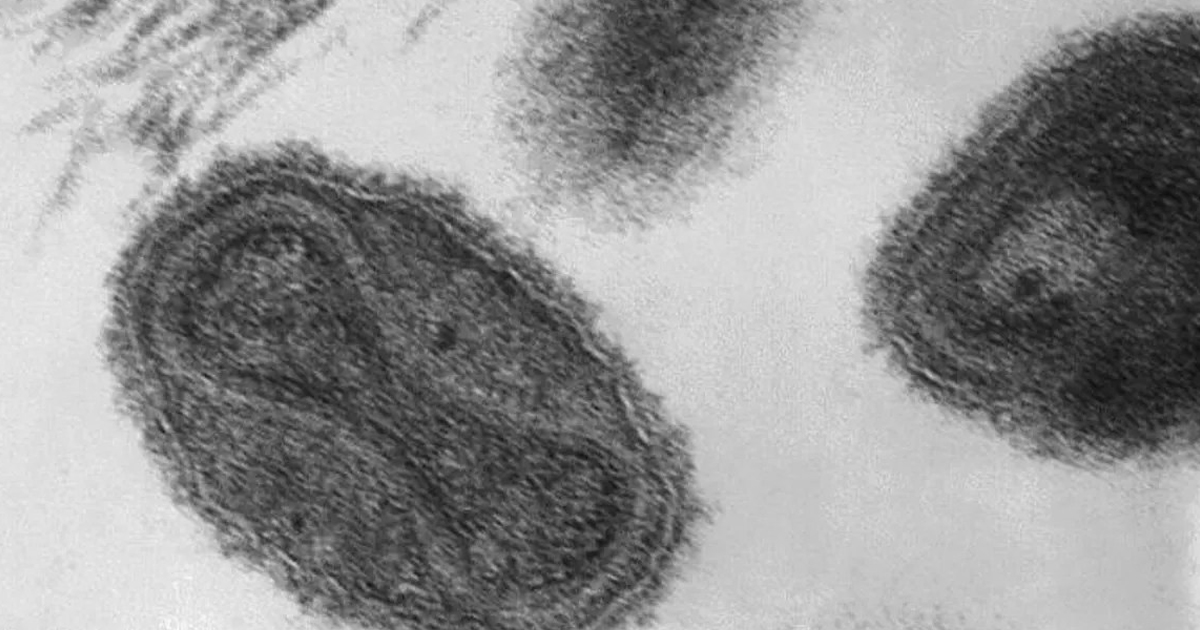
A health official said on Sunday that Britain is seeing daily infections of the rare monkeypox virus that are unrelated to travel to West Africa, where the disease is endemic.
After registering 20 cases on Friday, the UK Health Security Agency (UKHSA) said new figures would be released on Monday.
Susan Hopkins, the UKHSA’s chief medical adviser, said “absolutely” when asked if community transmission was now the norm in the UK.
“We’re finding cases where there hasn’t been any identified contact with someone from West Africa, which is what we’ve seen before in this country,” she told BBC television.
“We’re discovering more cases every day.”
Hopkins declined to confirm reports that one person was in intensive care, but said the outbreak was primarily affecting gay and bisexual men in urban areas.
“The risk to the general population remains extremely low at the moment, and I believe people should be aware of it,” she said, adding that symptoms would be “relatively mild” for most adults.
On May 7, the first case in the United Kingdom was reported in a patient who had recently traveled to Nigeria. In Europe and North America, the disease is also spreading.
Monkeypox is spread through contact with a contaminated person’s skin lesions and droplets, as well as shared items like bedding and towels.
Fever, muscle aches, swollen lymph nodes, chills, exhaustion, and a chickenpox-like rash on the hands and face are among the symptoms. After two to four weeks, they usually go away.
There is no specific treatment for monkeypox, but smallpox vaccination has been shown to be 85 percent effective in preventing it.
The UK government has already begun purchasing smallpox vaccine stocks, according to Education Secretary Nadhim Zahawi.
He told the BBC, “We’re taking it very, very seriously.”