
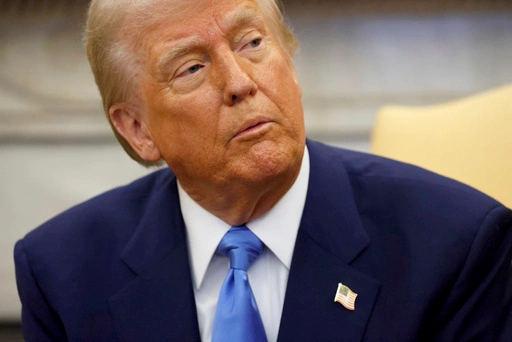
US President Donald Trump announced massive new tariffs on Canadian steel and aluminum Tuesday, doubling planned levies from 25% to 50% for imports from Canada. The move, unveiled on his Truth Social platform, comes as part of an escalating trade offensive aimed at pressuring allies and addressing perceived economic imbalances.
Trump’s decision targets Canada—historically one of the US’s closest trading partners—by responding to Ontario’s recent imposition of a 25% surcharge on electricity exports to three US states. In addition to the metal tariffs, Trump warned that if Canada does not drop what he called “egregious” tariffs, he would escalate tariffs on cars from April 2, a step that could effectively “shut down the automobile manufacturing business in Canada.”
In a bold declaration, Trump suggested the “only thing that makes sense” is for Canada to become the 51st state, a move he claimed would eliminate tariffs, reduce taxes, and resolve border security issues.
The tariffs for other US trading partners remain at 25%, affecting countries such as Brazil, Mexico, and the United Arab Emirates, with no exceptions—threatening cost increases across various industries from electronics to construction equipment.
The announcement has sparked a bitter war of words. Canada’s incoming Prime Minister Mark Carney vowed to defend “the Canadian way of life,” while Ontario Premier Doug Ford denounced the tariffs as an “unprovoked attack on our country, on families, on jobs.”
Industry expert EY-Parthenon noted that Canada supplies half of US aluminum imports and 20% of its steel imports. Meanwhile, former US Treasury Secretary Larry Summers cautioned that these tariff threats could inflict a self-inflicted wound on the US economy, particularly at a time when recession risks are rising.
Some US manufacturers, like Baltimore-based metal producer Marlin Steel, have welcomed the tariffs—reporting that increased levies on imported steel have already boosted domestic orders. However, other industry players warn that higher import costs could drive up prices for raw materials such as steel, potentially leading to higher consumer costs for items like nails and homebuilding products.
As trade tensions intensify, the tariffs mark another chapter in the ongoing global trade dispute that continues to reshape supply chains and manufacturing dynamics on both sides of the border.