
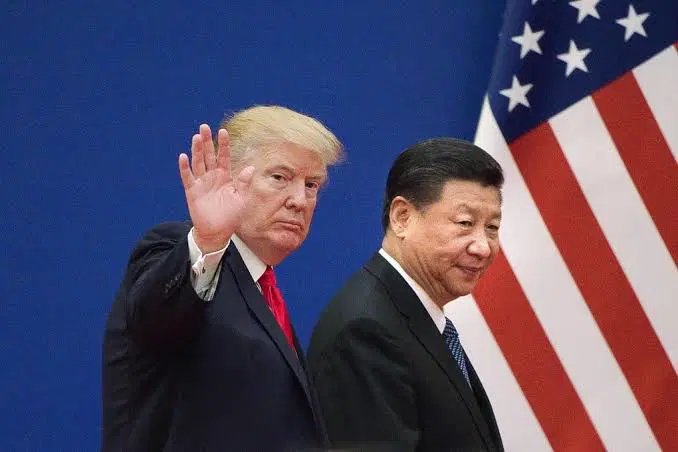
The United States and China have agreed to drastically reduce mutual tariffs for a 90-day period, marking a significant easing of tensions in a trade war that has rattled global markets for months. U.S. President Donald Trump hailed the outcome as a “total reset,” adding that he may speak with Chinese President Xi Jinping later this week.
The breakthrough came after high-level negotiations in Geneva — the first formal talks since Trump launched sweeping new tariffs on Chinese goods earlier this year. A joint statement from both governments confirmed that triple-digit levies will be reduced to double digits, with Washington lowering its tariffs on Chinese imports to 30%, down from as high as 145%. In return, China will slash its retaliatory tariffs from 125% to 10%.
Markets reacted swiftly, with major Wall Street indices surging on the news.
“Yesterday we achieved a total reset with China after productive talks in Geneva,” Trump said Monday. U.S. Treasury Secretary Scott Bessent, who led the talks with Chinese Vice Premier He Lifeng and trade envoy Li Chenggang, described the discussions as “productive” and “robust.”
The Geneva talks were held at the residence of Switzerland’s ambassador to the United Nations, where the two sides also agreed to establish a mechanism for ongoing dialogue on economic and trade issues. According to China’s commerce ministry, the agreement represents “substantial progress” and aligns with the broader global interest in stabilizing U.S.-China trade ties.
While the tariff reductions mark a shift from months of escalation, Washington’s duties still include a 20% levy tied to concerns over Chinese exports of chemicals used in producing fentanyl — a potent opioid linked to the U.S. overdose crisis. “Those remain unchanged for now,” said U.S. Trade Representative Jamieson Greer, though he confirmed both countries had agreed to collaborate more closely on fentanyl control going forward.
Despite the pause, economists remain cautious. “There is no guarantee that the 90-day truce will give way to a lasting ceasefire,” said Mark Williams of Capital Economics, adding that the U.S. may be positioning itself to build a coalition for tougher restrictions on Chinese trade.
Still, some analysts view the agreement as a win for Beijing. “China took a tough stance on the U.S. threat of high tariffs and eventually managed to get the tariffs down significantly without making concessions,” said Zhiwei Zhang, chief economist at Pinpoint Asset Management.
The truce follows Trump’s recent announcement of a separate trade deal with the United Kingdom — the first since his administration imposed sweeping tariffs last month on both allies and rivals.
As part of the new framework, both nations have agreed to continue “rolling consultations,” with future meetings to take place either bilaterally or in third countries. “We leave with a very good mechanism to avoid unfortunate escalations,” Bessent noted.