
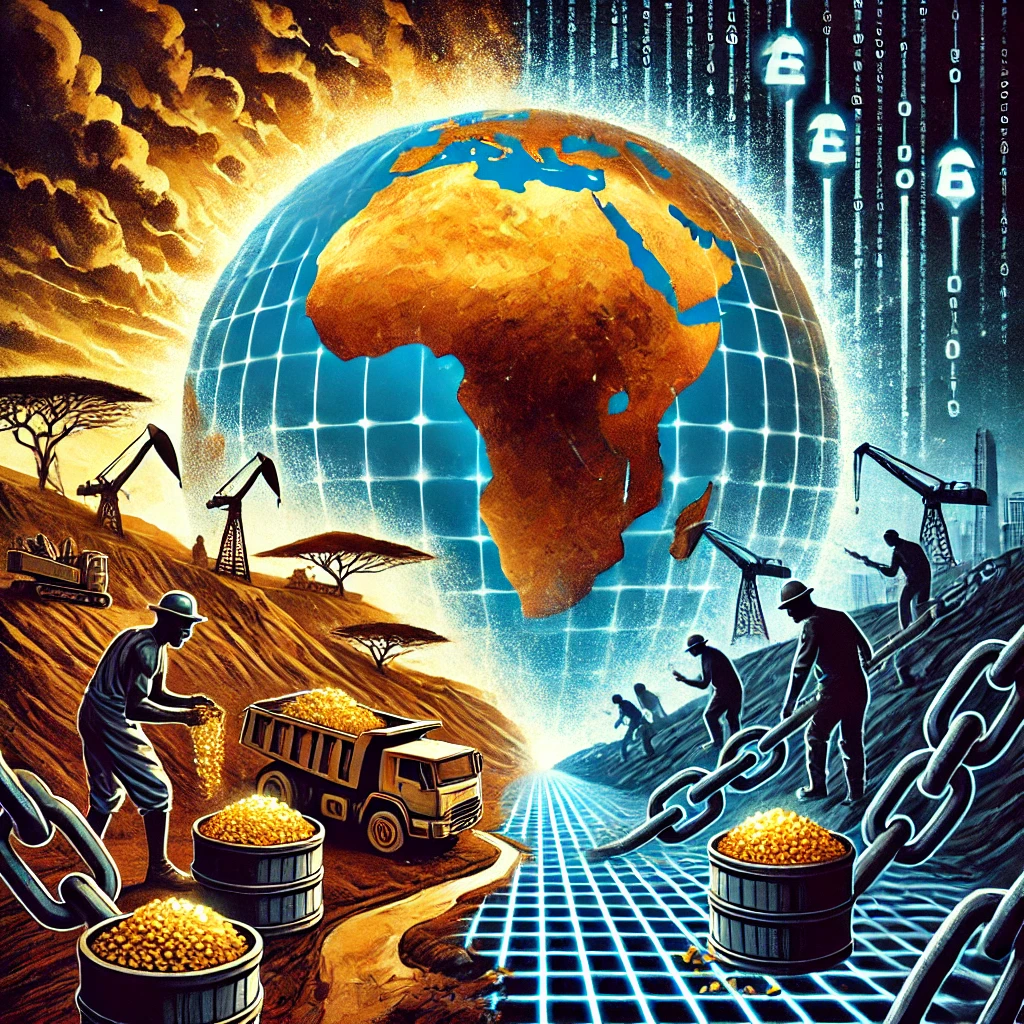
For centuries, Africa’s vast natural resources have been both a blessing and a curse. From colonial exploitation to modern corporate dominance, developed nations and their proxies have extracted Africa’s riches, often fueling conflict, displacement, and economic instability. Today, this battle is no longer limited to minerals like gold, cobalt, and diamonds—it now extends to Africa’s data, the new gold of the digital age.
The recent takeover of a second airport in eastern Congo by the Rwanda-backed M23 rebels is just another chapter in the ongoing struggle over Africa’s physical wealth. Meanwhile, in the digital space, Silicon Valley and other global tech giants are quietly harvesting Africa’s data—without fair compensation or accountability.
A History of External Control
Africa’s wealth has always been a magnet for foreign interests. During colonial rule, European powers extracted vast amounts of natural resources with little benefit to local populations. After independence, multinational corporations found new ways to dominate—through financial leverage, economic dependency, and sometimes, supporting armed groups that kept resource-rich regions unstable.
The Democratic Republic of Congo (DRC) is a prime example. Its reserves of cobalt, coltan, and gold—essential for modern technology—have kept it locked in a cycle of violence, driven by both regional and global actors seeking control. The term “blood diamonds” may have originated in Sierra Leone, but much of Africa’s mineral trade remains tainted by conflict.
Now, the battle is shifting to the digital realm. Africa is home to one of the fastest-growing internet user bases in the world, and tech giants see data as the next great resource. From financial transactions and social media activity to biometric records and AI training datasets, Africa’s digital wealth is being extracted at an unprecedented rate—often for free.
Modern Resource Conflicts—Both Physical and Digital
While proxy forces and foreign-backed militias continue to fight over minerals, global tech companies are engaged in a quieter form of exploitation. Big Tech firms—many based in Silicon Valley—are collecting vast amounts of African user data, often without local ownership, regulation, or compensation.
The issue is clear: Africa provides the raw data, but the profits and control remain in the hands of foreign corporations. Just as minerals leave Africa to be refined abroad before being sold back at a premium, African data is processed in foreign AI labs and cloud centers—powering billion-dollar companies with little return to the continent.
Nigeria, recognizing the stakes, is leading the charge for Digital Sovereignty—pushing for stronger data protection laws, local data hosting, and fair compensation for African-generated data. Other nations are beginning to follow suit, recognizing that just like their physical resources, data must be owned, protected, and monetized fairly.
A Path Forward: Taking Control of Both Physical and Digital Wealth
Breaking this cycle requires a new level of bold action at national and continental levels:
Resource Ownership and Economic Policies:
African governments must prioritize national ownership of both natural and digital resources, ensuring that wealth benefits citizens rather than foreign corporations.
Countries like Botswana have successfully regulated their diamond trade; similar strategies must be applied to critical minerals like cobalt, lithium, and rare earth metals—which are vital for the global tech industry.
Digital Sovereignty and Fair Data Compensation:
African nations must enforce stronger data protection laws and require tech companies to host African data within the continent.
Fair Data Compensation: Just as countries charge royalties for mineral extraction, Africa must demand royalties on its data—ensuring companies pay for access to African user data.
Regional Cooperation and Continental Strategy:
The African Union (AU) must take the lead in protecting both physical and digital resources.
Continental digital policies, like the African Continental Free Trade Area (AfCFTA) digital economy strategy, should include strict rules on data extraction and foreign tech investments.
Accountability for Foreign Exploitation:
The international community must stop pretending to be neutral while benefiting from Africa’s wealth.
anctions should not just target local warlords, but also multinational corporations that profit from Africa’s instability—whether through illicit mineral trade or unethical data mining.
Technology for Transparency:
Blockchain and AI-driven tracking systems should be deployed to monitor both mineral supply chains and data flow, exposing illegal trade and enforcing ethical standards.
Public Awareness and Advocacy:
As global pressure led to the Kimberley Process for blood diamonds, sustained activism can push for digital fairness, ensuring African data isn’t exploited under vague “terms of service.”
A Turning Point for Africa
The crisis in Congo is not just about minerals—it reflects the broader challenge of who controls Africa’s wealth in the 21st century. If African nations fail to own their resources—both physical and digital—foreign interests will continue to extract value while the continent remains in economic limbo.
The solution is clear: Africa must move from being a supplier of raw materials and raw data to a true economic powerhouse. The world relies on Africa’s minerals to build the future and on Africa’s data to fuel the AI revolution. The continent must demand its fair share—by force of law, policy, and united leadership.
The question now is: Will Africa continue to be exploited, or will it reclaim control of its future? The time to act is now.