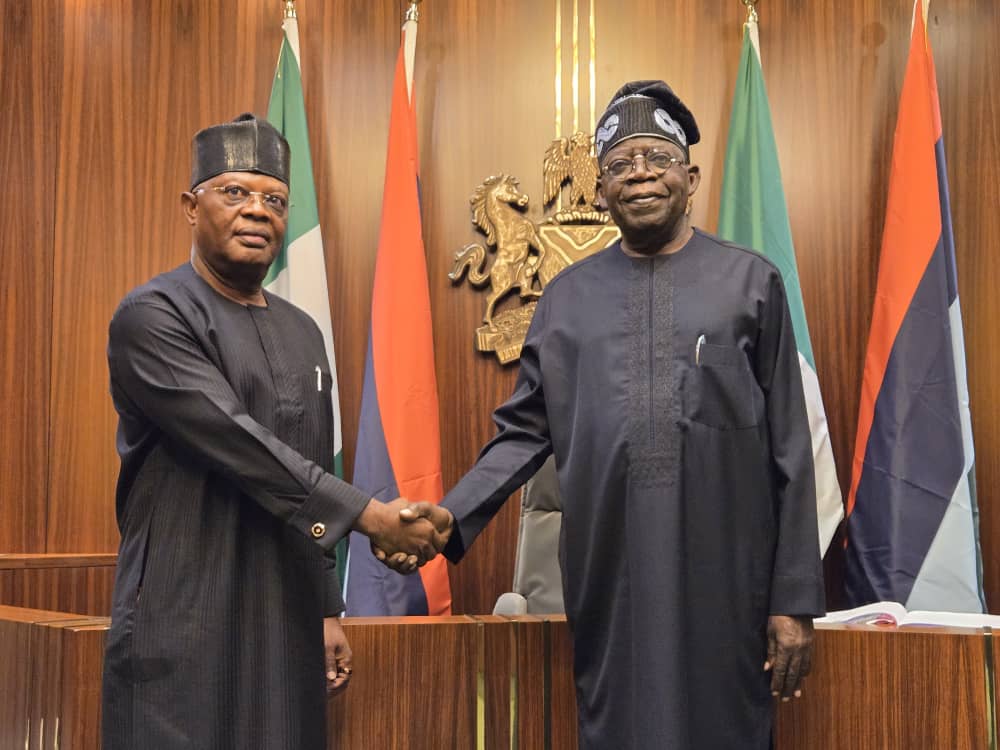
A coalition of civil rights organisations led by the Human Rights Writers Association of Nigeria (HURIWA) has issued a scathing denunciation of Vice Admiral Ibok-Ete Ibas (rtd), accusing the interim administrator of Rivers State of orchestrating what it describes as a “systematic and unconstitutional dismantling of democratic structures.”
The backlash follows a series of controversial decisions made by Ibas, who was appointed by President Bola Ahmed Tinubu to oversee the oil-rich South-South state amid an escalating political crisis. In a strongly worded statement signed by HURIWA’s National Coordinator, Emmanuel Onwubiko, the group likened Ibas’s actions to that of “a bull in a China shop,” citing the removal of Governor Siminalayi Fubara’s official portraits from public buildings and the installation of unelected officials in local councils—despite existing court orders to the contrary.
“These acts constitute a brazen power grab by someone who once served the country with distinction,” Onwubiko said. “This is not only a betrayal of democratic norms but a dangerous precedent.”
The statement, endorsed by 36 other non-governmental organisations, asserts that Fubara remains the duly elected and legally recognised governor of Rivers State. It warns that attempts to truncate his tenure risk plunging the state—and perhaps the country—into deeper political instability.
Adding his voice to the growing dissent, Ambassador Godknows Igali, a respected former diplomat and permanent secretary, described the developments as “an embarrassing aberration to all men of goodwill and good conscience.” Igali claimed to have witnessed the removal of Governor Fubara’s photograph at the Port Harcourt International Airport and was told the directive came from the newly installed administration.
“This move is more than symbolic,” Igali said. “It is an attempt to erase the legitimacy of an elected governor and replace constitutional governance with executive fiat.”
Beyond symbolic gestures, critics also cite substantive institutional disruptions. HURIWA and other observers have condemned the suspension of key bodies such as the Rivers State Independent Electoral Commission and the governing councils of tertiary institutions—actions they argue lack legal basis and undermine constitutional protections.
HURIWA further claims Ibas has disregarded a Federal High Court ruling that expressly forbids the appointment of unelected local government officials. “The installation of what can only be described as ‘Kangaroo administrators’ is a direct affront to Section 7 of the 1999 Constitution, which guarantees local government autonomy,” Onwubiko said.
Legal experts have also raised concerns about the administrator’s appointment of new officials to the Rivers State Independent Electoral Commission despite the ongoing tenure of its current commissioners. “On what legal basis does a sole administrator sack a statutory body mid-tenure?” Onwubiko queried. “This is not governance—it’s anarchy masquerading as reform.”
The civil rights group has called on Rivers residents, the judiciary, and Nigeria’s democratic institutions to reject what it describes as an “undemocratic takeover” of the state.
“The President of Nigeria has no constitutional authority to remove a sitting governor,” Onwubiko warned. “This affront to democracy must be reversed. The rule of law, not political expediency, must prevail.”
While the federal government has yet to respond to the allegations, pressure is mounting. HURIWA is urging Ibas to step down from what it calls a “politically charged assignment” and protect his legacy as a respected naval officer rather than risk being remembered, in Onwubiko’s words, as “the man who helped destroy democracy in Rivers State.”
As the political standoff intensifies, the future of governance in Rivers hangs in the balance—caught between constitutional authority and a growing fear of executive overreach.