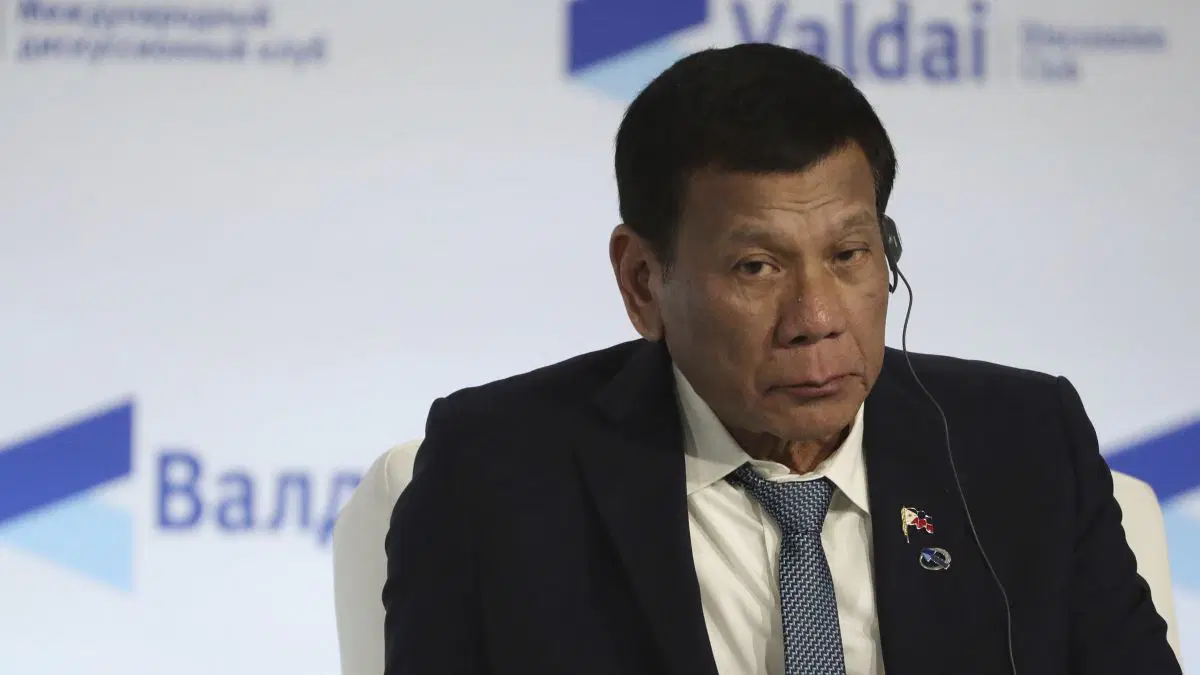
Former Philippine President Rodrigo Duterte was taken into custody Tuesday in Manila after police executed an arrest warrant issued by the International Criminal Court (ICC) over his controversial war on drugs. The 79-year-old leader now faces charges of “crime against humanity of murder” for the crackdown that, according to rights groups, claimed tens of thousands of lives—mostly poor men allegedly targeted without evidence of drug links.
According to a statement from the presidential palace, Interpol Manila received the official ICC warrant early Tuesday morning, and Duterte is currently held at Villamor Air Base, adjacent to Manila airport, where government doctors are monitoring his condition. Duterte, in a video posted to his daughter Veronica’s Instagram, demanded to know the legal basis for his arrest. “Show me now the legal basis of my being here,” he said, questioning why he was detained without his lawyers being allowed to meet him.
Duterte’s former chief legal counsel, Salvador Panelo, condemned the arrest as “unlawful,” noting that a hard copy of the ICC warrant had not been provided. Meanwhile, supporters and human rights groups have expressed contrasting views. A group representing the families of those killed in the drug war hailed the arrest as “long overdue,” while Philippine rights alliance Karapatan urged President Ferdinand Marcos Jr. to ensure Duterte is surrendered to the ICC for trial.
The former president, whose violent anti-drug campaign remains deeply polarizing, had recently warned in Hong Kong of his willingness to accept an arrest if it came, despite his infamous derogatory remarks against ICC investigators. The ICC maintains jurisdiction over killings committed before the Philippines’ 2019 withdrawal from the court—a move ordered by Duterte himself.
As the Philippines grapples with the fallout of the drug war, Duterte’s arrest has intensified debates over accountability, justice, and the future of a political legacy that still commands substantial support despite its human cost.