
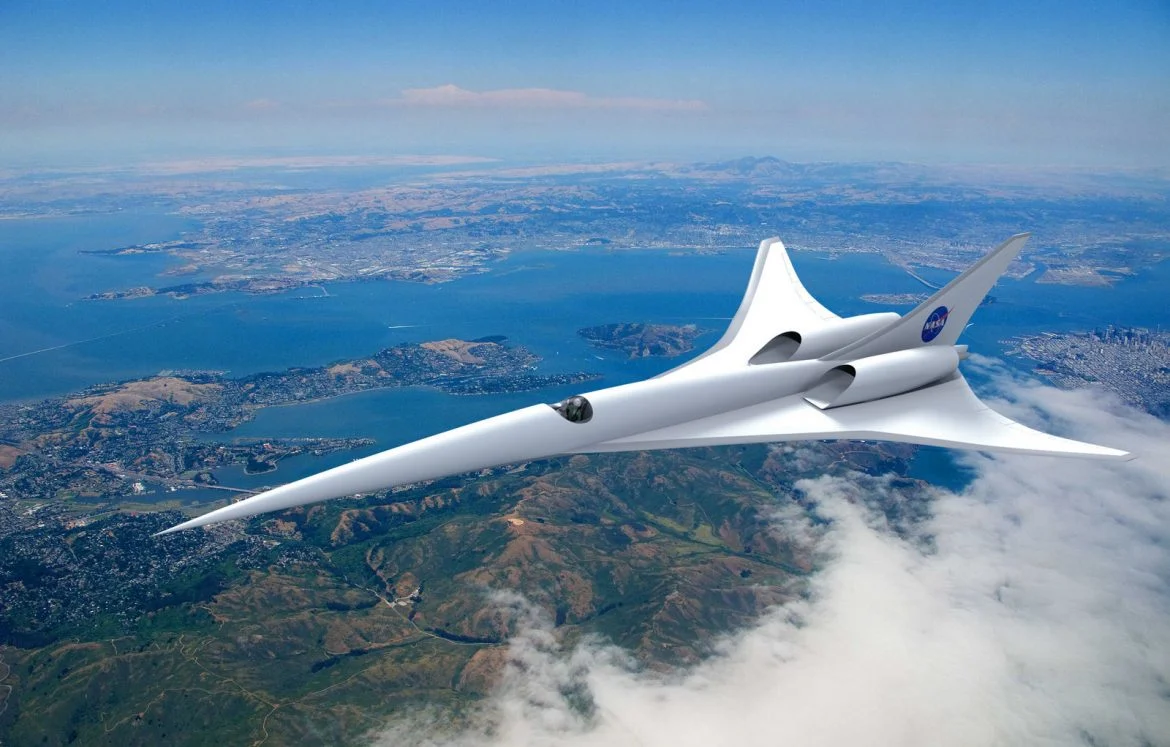
NASA and Boeing are partnering to craft an astonishing supersonic aircraft that could revolutionize air travel. With a projected speed of Mach 4 (roughly 3000 mph), this innovation not only outpaces the legendary SR-71 Blackbird but also exceeds the Concorde’s capabilities.
This technological marvel is anticipated to reduce the New York to London flight time to under one and a half hours, a stark contrast to the typical eight to nine-hour journey. The X-59, part of NASA’s Quesst Mission, seeks to quell the sonic boom predicament that hampered the Concorde, showcasing the agency’s determination to bring supersonic flight back into the realm of possibility.
Breaking the sound barrier over land remains a challenge due to the sonic boom impact, but flying over oceans offers a workaround, paving the way for vital transoceanic routes. NASA, recognizing fifty such routes linking significant cities across the globe, has unveiled plans for the supersonic passenger jet. To advance this endeavor, NASA will issue two-year contracts to aerospace giants, with Boeing and Northrop Grumman leading the charge.
These companies, alongside collaborators like Exosonic, Rolls-Royce, and Boom Supersonic, will explore concepts encompassing airframe, power, propulsion, and materials designs to ensure safe and efficient supersonic travel.
Mary Jo Long-Davis, NASA’s Hypersonic Technology Project Manager, emphasizes the importance of responsible innovation that benefits travelers without harming the environment. The stage is set for a new era of air travel, where speed and sustainability converge to reshape the skies.