
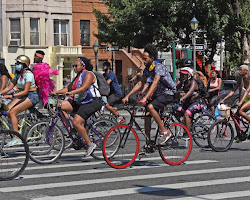
In an effort to foster a cleaner environment and promote a healthier lifestyle, the Federal Ministry of Transportation is urging Nigerians to consider bicycles as an alternative means of commuting.
During a one-day stakeholders sensitisation meeting in Abuja, Musa Ibrahim, the Director of Road Transport and Mass Transit Administration, emphasized the importance of cycling in Nigeria as it could lead to a significant reduction in road crash incidents.
The meeting coincides with the annual celebration of World Bicycle Day on June 3, a day recognized by a United Nations General Assembly (UNGA) resolution.
The World Bicycle Day aims to highlight the simplicity, affordability, reliability, cleanliness, and environmental sustainability of bicycles as a mode of transport that promotes environmental stewardship and health.
This year’s theme, ‘Riding Together for a Sustainable Future,’ reinforces these principles.
The benefits of cycling extend beyond environmental concerns. Proponents of Non-Motorised Transportation (NMT), like Emmanuel John, the Chief Executive Officer of Ochenuell Mobility, argue that cycling can play a pivotal role in eradicating poverty, supporting sustainable development, enhancing education, particularly physical education for children and young people, and promoting health, disease prevention, and social inclusion.
Emmanuel John’s presentation, ‘Power of Cycling,’ also shed light on a study conducted by the Organisation for Economic Co-operation and Development (OECD) countries, which revealed that most African nations lose 3% of their Gross Domestic Product (GDP) due to traffic congestion annually.
To address these challenges and reduce reliance on motorised transportation, John proposed the development of a Non-Motorised Transportation (NMT) culture in the country, with the adoption of Green Corridors as a solution.
Supporting and implementing the National Stakeholders Forum on Bicycle Transportation could go a long way in alleviating many issues associated with increased usage of motorised vehicles, added John.
In conclusion, the promotion of cycling as a viable commuting option aligns with the nation’s efforts towards a more sustainable future, encouraging environmental responsibility and healthier lifestyles for Nigerians.