
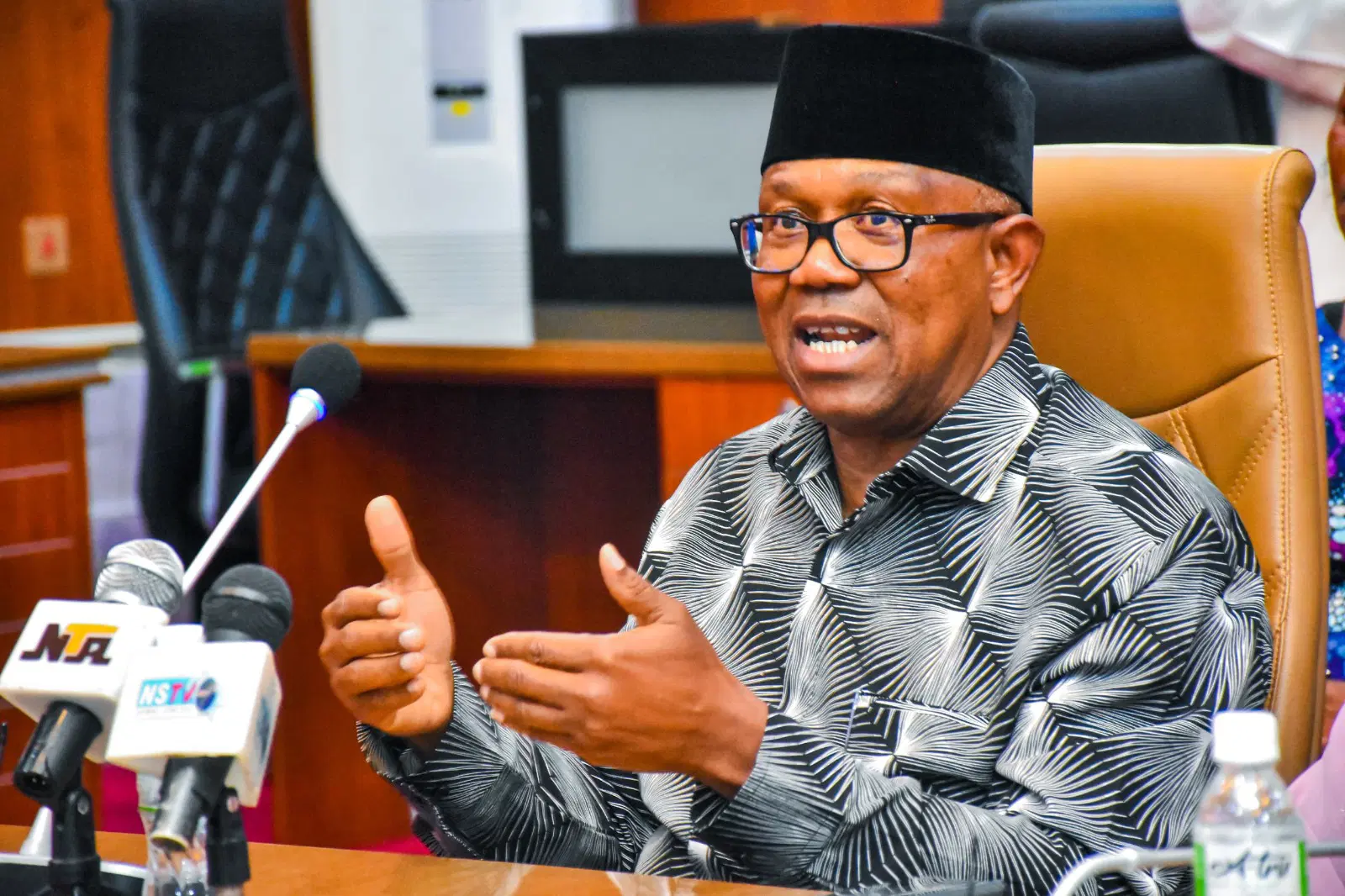
Labour Party’s 2023 presidential candidate, Peter Obi, has confirmed he will run in the 2027 presidential election, offering to serve a single four-year term if elected — a move he says is driven by urgency to reset Nigeria’s trajectory.
Obi made the declaration during a virtual town hall on X (formerly Twitter) Spaces, hosted Sunday night to engage his supporters at home and abroad. According to a statement by his media team, Peter Obi Media Reach (POMR), signed by spokesman Ibrahim Umar, the former Anambra State governor also dismissed ongoing speculations about a joint ticket with former Vice President Atiku Abubakar, describing them as false.
“I’ve not discussed any running mate arrangement with anyone,” Obi said, although he acknowledged being part of coalition talks, which he insisted must be rooted in national interest. “If the coalition is not about stopping the killings in Benue and Zamfara, reviving our economy, or putting food on Nigerians’ tables — count me out,” he declared.
Obi told listeners that Nigeria is at war on multiple fronts and needs urgent intervention. “I will bring stability to Nigeria within two years. Leaders should sit in Nigeria to fix Nigeria,” he said, urging the electorate to see themselves as partners in the rescue mission.
Touching on internal disputes in the Labour Party, Obi assured supporters that he and party elders are working behind the scenes to ensure INEC recognises the Nenadi Usman-led faction, in line with a recent Supreme Court ruling.
On the sensitive issue of power rotation, Obi reiterated his support for zoning. “I believe in the rotation of government between North and South. I implemented it in Anambra as governor,” he noted.
Taking aim at President Bola Tinubu, Obi criticised his travel itinerary, particularly a recent trip to St Lucia, where the president is reportedly spending eight nights. “St Lucia is smaller than Ajegunle,” Obi said. “In two years, President Tinubu has not spent a night outside Lagos in any Nigerian state — yet he’s spending over a week abroad. What does that say about his priorities?”
He continued: “People are dying in Benue, Borno, and other parts of the country, and our leaders are commissioning bus stops and holidaying abroad.”
Looking ahead to 2027, Obi promised a more strategic and assertive campaign. “We will follow a non-violent approach, but we will insist that things are done right before results are announced in Abuja. Our votes will count — and we will ensure they count.”
He laid out a three-point agenda for his first 100 days in office: prioritising security, education, and poverty eradication. He also vowed to cut the cost of governance, root out corruption from day one, and ensure that no member of his family is involved in public contracts or political interference.
“My past speaks loudly for me,” he said. “In Anambra, wherever there was a crisis, I showed up. Anyone who wants to lead this country must be willing to risk their own life for the lives of Nigerians.”
Obi ended with a sharp observation: “No one abroad takes a country seriously if it doesn’t have a stable government. Stability and leadership by example must begin at the top.”