
By NNH News Corp | May 20, 2026
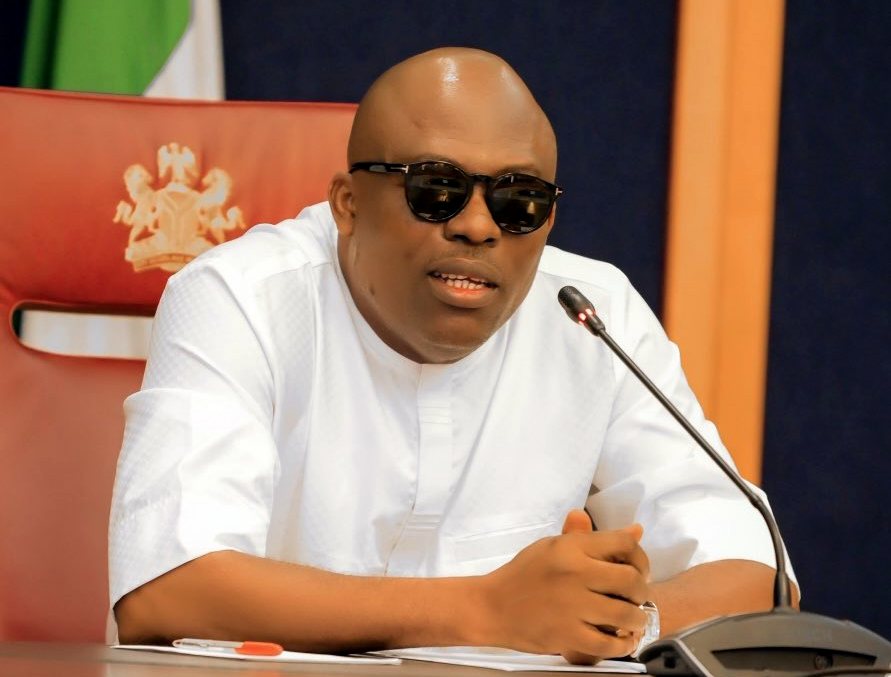
In a move that has reshaped the immediate contours of Rivers State politics, Governor Siminalayi Fubara has withdrawn from the All Progressives Congress (APC) governorship primaries ahead of the 2027 elections. In a personally signed statement, he cited the imperative of peace, unity, and stability, framing the decision as a “sacrifice” and “act of conviction” rather than weakness. He pledged full support for the eventual APC candidate.
This development, coming on the same day as Tonye Cole’s withdrawal, marks a significant de-escalation in intra-party tensions while underscoring deeper power realignments in the oil-rich state.
The Context: A Feud That Refuses to Die
Rivers State has been defined for years by the bitter rivalry between Governor Fubara and his predecessor, FCT Minister Nyesom Wike. The crisis escalated through defections, a state of emergency in 2025, suspensions, and parallel structures in the House of Assembly. Fubara’s defection from the PDP to the APC in late 2025 was widely seen as a bid to leverage federal backing against Wike’s influence.
However, APC internal dynamics revealed the limits of that strategy. Wike-aligned figures such as Kingsley Chinda (Minority Leader, House of Representatives) and Dakorinama George-Kelly (former Commissioner for Works) were cleared and positioned strongly. Recent disqualifications of several Fubara loyalists from assembly primaries further signaled that the national APC leadership was balancing interests, likely prioritizing broader party unity and Wike’s federal clout.
Fubara’s withdrawal appears to be a pragmatic recognition of these realities. By stepping aside voluntarily, he preserves his dignity, maintains relevance as the sitting governor until 2027, and positions himself as a statesman prioritizing the state over personal ambition.
The Non-Importance of Tonye Cole’s Withdrawal
Tonye Cole’s exit, while symbolically notable as a long-standing APC figure and 2023 governorship candidate, is largely peripheral to the core power struggle. Cole represents the older Amaechi-era APC bloc. His decision, framed around party unity following stakeholder meetings, removes a technocratic voice but does not alter the fundamental Fubara-Wike axis that dominates Rivers politics.
Cole lacked the grassroots mobilization or federal muscle to challenge the incumbent governor or Wike’s machinery effectively. His withdrawal is better understood as a clean-up operation to streamline the primary and project APC cohesion ahead of 2027, rather than a decisive shift. It pales in significance compared to Fubara’s move, which carries the weight of incumbency and public perception.
Next Candidates in Line
With Fubara and Cole out, the APC field narrows significantly. Prominent names now include:
– Alabo Dakorinama George-Kelly — A core Wike ally and technocrat with administrative experience. Seen as a strong contender favored by elements of the “Rainbow Coalition.”
– Kingsley Chinda — Wike loyalist who crossed into APC processes. He brings legislative gravitas and strong networks.
Other potential aspirants or consensus figures may emerge, but the contest now heavily tilts toward Wike-influenced candidates. The APC primary (originally slated for May 21) will likely produce a nominee acceptable to the national leadership and major power blocs.
The Way Forward for Rivers State
Fubara’s sacrifice offers a temporary breather, but sustainable progress requires more than withdrawal
1. Genuine Reconciliation — President Tinubu’s interventions have yielded partial truces, but a lasting Fubara-Wike détente (or at least non-hostile coexistence) is essential. Rivers cannot afford perpetual crisis governance.
2. Focus on Governance and Delivery — Fubara should double down on infrastructure, human capital, and economic diversification (beyond oil). Visible dividends will strengthen his political capital regardless of party ticket.
3. Party Consolidation and Electoral Strategy — For APC, the priority is presenting a candidate capable of unifying factions and delivering victory in 2027. A divisive primary could gift the PDP or other platforms an opening.
4. Broader Stakeholder Engagement — Rivers’ complex ethnic and geographic dynamics (Upland-Riverine, etc.) demand inclusive politics. Any candidate must transcend godfatherism narratives.
5. Economic and Social Stability — Investors and residents need certainty. Prolonged political warfare deters development in a state with immense potential.
In Conclusion, Fubara’s withdrawal is statesmanlike politics in a high-stakes environment. It reflects maturity but also the enduring influence of godfatherism and federal alignments. For Rivers State, the true test lies not in who gets the APC ticket, but whether the eventual leadership can heal divisions and deliver tangible progress. The coming months — from primaries to general elections — will determine if this “sacrifice” heralds genuine stability or merely a tactical pause in the long-running power play.
NNH News Corp – Independent, Insightful, Unrivaled.