
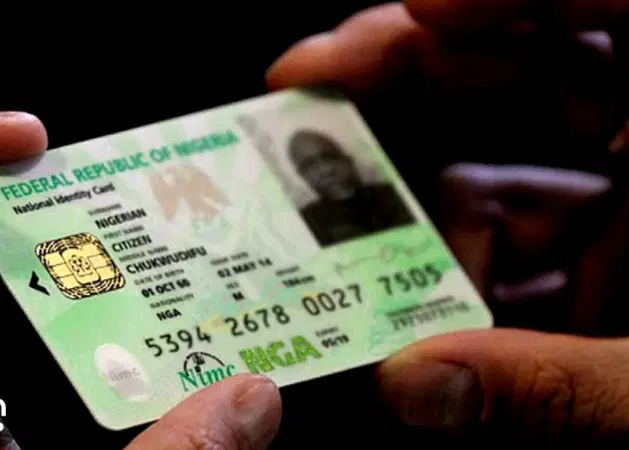
President Bola Tinubu has announced that more than 126 million Nigerians are now captured in the National Identity Management Commission (NIMC) database, describing the milestone as a foundation for national security and digital inclusion.
Speaking through the Secretary to the Government of the Federation, George Akume, at the 7th National Identity Day celebration in Abuja on Tuesday, Tinubu said the achievement represented “126 million stories of visibility, empowerment and inclusion.”
“Identity is power, protection, and participation. Every individual counted is a step closer to a stronger nation,” the President said, stressing that digital identity had become central to governance, security, and opportunity in the 21st century.
This year’s theme, “Public Key Infrastructure (PKI): Backbone to Digital Public Infrastructure”, highlighted the role of secure digital trust in driving Nigeria’s transformation. Interior Minister Olubunmi Tunji-Ojo said PKI would make government services “verifiable, auditable, and internationally credible,” while also strengthening immigration, passport, and border management systems.
Both Tinubu and Tunji-Ojo commended NIMC Director-General Abisoye Coker-Odusote for what they called a historic turnaround of the agency in just over a year. Coker-Odusote said the NIMC had cleared 2.5 million backlogs, expanded the national database to accommodate 250 million records, and deployed more than 800 mobile enrolment devices nationwide.
She also noted the rollout of over 200 diaspora centres, NYSC-assisted ward-level enrolment, and the processing of over 500,000 updates via self-service platforms.
According to her, the integration of the National Identification Number (NIN) has already enabled 449,000 students to access ₦86.35 billion in education loans through the National Education Loan Fund, while linking identities with banking, pensions, agriculture subsidies, and welfare schemes.
Coker-Odusote said NIMC’s work rests on three pillars: inclusion, protection, and empowerment. She highlighted progress in registering 75 per cent of inmates in correctional centres, boosting diaspora enrolment by 52 per cent, and partnering with the police cybercrime unit to combat identity fraud.
“Farmers, students, and vulnerable groups are now directly benefiting from subsidies, loans, and welfare tied to verified digital identity,” she said.