
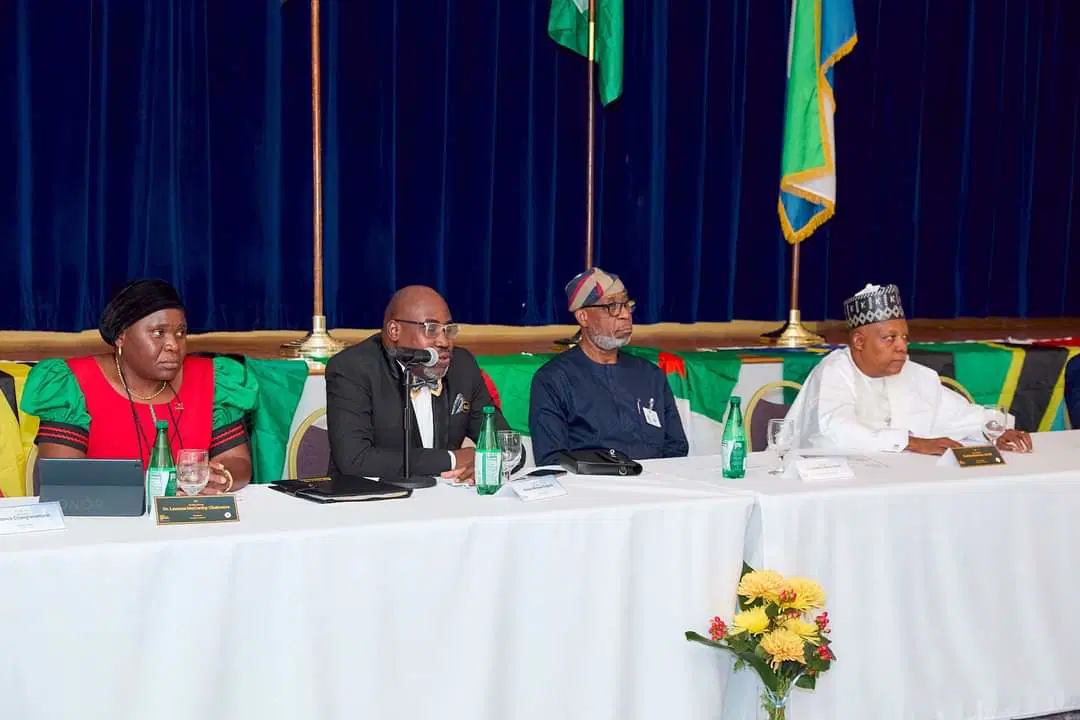
President Bola Tinubu has emphasized that Africa holds a significant share of the world’s critical mineral reserves, including 92% of platinum, 56% of cobalt, and 54% of manganese, yet remains underdeveloped. Speaking at the African Minerals Strategy Group (AMSG) meeting, held on the sidelines of the 79th United Nations General Assembly (UNGA) in New York, Tinubu, represented by Vice President Kashim Shettima, attributed this underdevelopment to the continent’s reliance on exporting raw materials without local value addition.
In a statement released by his spokesperson, Stanley Nkwocha, Tinubu explained that Africa’s practice of exporting raw minerals for refining abroad and repurchasing finished products at inflated prices has deepened poverty and hindered economic progress. He stressed the need for African nations to adopt a new strategy that focuses on local processing and manufacturing to break free from dependency on foreign markets.
“A situation in which the raw minerals are extracted from our countries, exported, refined, and sold to us as finished products merely consolidates the foundations of our misery and pushes us further down the depths of underdevelopment,” Tinubu said.
The President called for an agenda that prioritizes local value addition, crucial for industrializing Africa and achieving sustainable economic growth. Tinubu also highlighted the importance of lithium-ion technology, which has transformed industries such as consumer electronics and electric vehicles, creating new demand for Africa’s critical minerals.
He underscored Africa’s essential role in the global supply chain, noting that the world’s growing need for new battery technologies has triggered renewed interest in Africa’s mineral wealth. “In short, the world needs Africa today more than ever,” he said.
President Tinubu reiterated his administration’s commitment to adding value to Nigeria’s mineral resources, aligning with the vision of the AMSG, chaired by Nigeria’s Minister of Solid Minerals Development, Dele Alake. He emphasized that Nigeria’s large market, with over 226 million people, has the potential to drive economic growth through industries such as lithium battery manufacturing.
Minister Alake, speaking in his capacity as Chairman of the AMSG, laid out the group’s vision to transform Africa’s mining sector through local value addition and industrialization. He criticized the current model, where raw minerals are exported, resulting in the loss of economic opportunities and jobs in Africa. Alake proposed shifting towards processing raw minerals into finished goods within the continent as a strategy to enhance Africa’s economic independence and increase its contribution to GDP.
AMSG General Secretary Moses Engadu also called for strong political will among African leaders, advocating for value addition as a core requirement for granting mineral licenses to investors.
The meeting saw attendance from investors, development partners, multilateral institutions, and major financial organizations, all focused on advancing Africa’s economic transformation through its mineral resources.