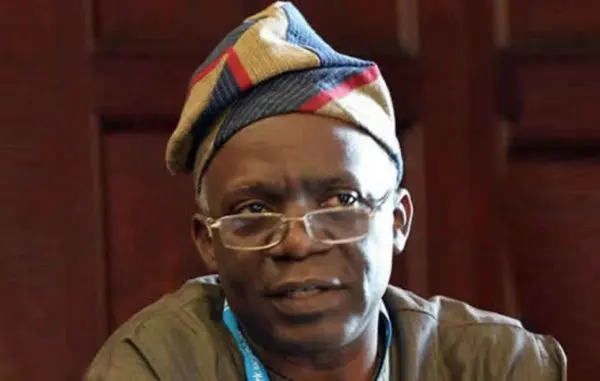
Nigeria’s 2027 general elections risk falling short of credibility if the flaws that marred previous polls are not addressed, human rights lawyers Femi Falana and Ayo Obe have warned.
The two lawyers spoke on Thursday at the 25th Mike Okonkwo Annual Lecture in Lagos, where they called for strict adherence to electoral laws, an end to vote buying and stronger protection for voters from intimidation.
The lecture, themed “Democracy at the Crossroads: Electoral Credibility, Judicial Integrity and the Future of Nigeria,” examined the role of electoral institutions and the judiciary in protecting Nigeria’s democratic process.
Falana, who chaired the event, said the 2027 elections would be a major test for the country but expressed concern over indications that the polls might not be free and fair.
He said Nigerians must be able to participate in elections without fear, intimidation or threats, while warning politicians against inflammatory rhetoric directed at their opponents.
Falana also said civil society organisations were prepared to take legal action against politicians and others who issued threats against political opponents.
He criticised the growing reliance on election tribunals and courts to resolve electoral disputes, arguing that many petitions fail not necessarily because elections were credible, but because petitioners were unable to establish their cases or fell foul of technical requirements.
Vote buying
Falana singled out vote buying as one of the biggest threats to Nigeria’s electoral system, saying the practice had become increasingly expensive in recent off-cycle elections.
He cited the recent Osun governorship election, where he said billions of naira were allegedly spent to induce voters.
Estimates of the amount allegedly spent ranged from N43 billion to N110 billion, he said, adding that the figures demonstrated the scale of the problem.
Falana warned that the situation could become worse during the 2027 general elections, when voting will take place across the country.
He said the amounts reportedly offered to voters had also risen, from about N5,000 in Ekiti to between N20,000 and N50,000 in Osun.
‘Follow the rules’
Obe, in her lecture, urged officials of the Independent National Electoral Commission (INEC) to rely on established procedures and resist pressure to compromise electoral standards.
She cited the conduct of Prof Nnenna Nnannaya Oti, the returning officer for the 2023 Abia State governorship election, as an example of how electoral officials could protect the integrity of the process.
Oti had refused to announce unverified results from Obingwa Local Government Area and insisted that the figures be authenticated against data from the Bimodal Voter Accreditation System (BVAS) before the collation process could continue.
Obe described the decision as a “glimmer of hope” for Nigeria’s electoral system.
She said the example demonstrated that the credibility of an election depended not only on technology but also on officials being willing to follow established rules.
“The part of her declaration on which I want to dwell is, ‘I shall stand squarely on the processes and procedures of INEC,’” Obe said.
She warned that electoral officials, political actors and other stakeholders must carry out their responsibilities properly if Nigeria’s democracy is to retain public confidence.
Okonkwo marks 25th lecture
Bishop Mike Okonkwo, founder of The Redeemed Evangelical Mission (TREM), said Nigerians must also take responsibility for driving positive change in the country.
He recalled his longstanding relationship with Falana, who handled some of his legal cases during the early years of his ministry.
Okonkwo also commended Obe for her contribution to the lecture and expressed gratitude for reaching another birthday and witnessing the 25th edition of the annual event.