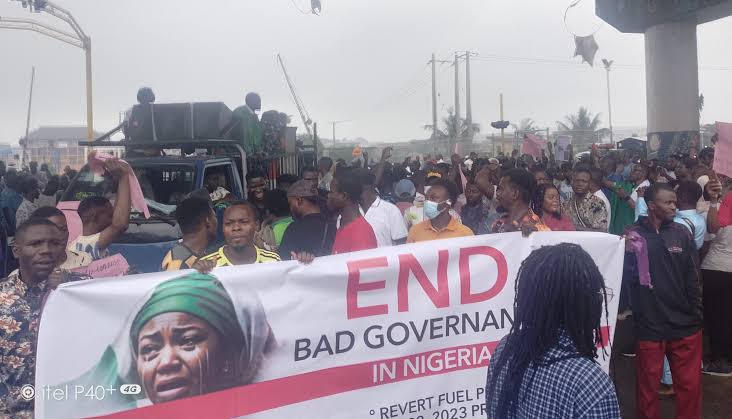
As the “End Bad Government in Nigeria” protests continue to spread across the nation, with Rivers State, located in the South-South region, being the latest hotspot, it’s becoming increasingly clear that restraint is essential to prevent anarchy from taking hold. Notably, major flashpoints have been recorded in the northern states of Kano, Kaduna, Katsina, and others, highlighting the widespread nature of the unrest. The Rivers State Police Command’s press release, dated August 5, 2024, highlights the concerning turn of events, with protesters resorting to unlawful acts and the organizers seemingly losing control.
In this critical moment, the three arms of government – the Executive, Legislature, and Judiciary – must live up to the expectations of Nigerians by virtue of their constitutional mandates. They have a responsibility to utilize the democratic framework of Nigeria to take immediate action and restore stability. The Executive, Legislature, and Judiciary must recognize that their inaction is perceived as failure, and that they all have a critical role to play in addressing the unrest.
Specifically, the Executive (President Bola Ahmad Tinubu) recently addressed the nation, focusing on the economic actions he has embarked on to alleviate sufferings, but did not fully address critical issues of governance, insecurity, and corruption, which has become a major problem facing the country. He also neglected to address the country’s shift from a producing nation to a consumer nation, relying heavily on imports. He needs to assure citizens of his commitment to addressing these concerns, particularly regarding insecurity, economic hardship, and corruption. He should also take concrete steps to reform the economy by specifically addressing corruption, and improving public safety.
On the other hand, the Legislature (National Assembly), led by Senate President Godswill Akpabio and Speaker of the House of Representatives, Abdulrazak Adebayo Tajudeen, should immediately convene an emergency session to address the protesters’ demands, particularly regarding constitutional reform, electoral reform, and economic empowerment. They should also ensure that the incoming 2025 budget is people-oriented and addresses the pressing needs of Nigerians while committing to the full implementation of the 2024 Appropriations Act
The Judiciary, the last hope for the common man, is faced with the impending retirement of the current Chief Justice of Nigeria, Olukayode Ariwola, who will retire on August 24th, 2024, after attaining the age of 70. A substantive Chief Justice of the Supreme Court should be appointed to ensure that justice is served in all cases, particularly regarding human rights abuses, corruption, and electoral malpractices. They should also take steps to reform the judicial system, ensuring that it is fair, transparent, and accountable to the people.
At the subnational levels, State governors, should also take immediate action to address the concerns of their people, particularly regarding security, infrastructure, environmental degradation, and economic empowerment, as well as bad governance, characterised by corruption and other wastages. They should engage with protesters, listen to their demands, and work towards finding solutions to the pressing issues affecting their states.
However, it’s crucial to note that merely releasing funds by the government to address the problem is not enough. The government must be held accountable for its actions, and the people must be assured that their voices are being heard. Citizens must also give the government a timeframe for implementation of these new measures, rather than simply demanding quick fixes.
About NNH
NNH is one of Nigeria’s top executives go-to media organisations, known for its unique, insightful, informative, and top-level policy analysis and programmes. With a focus on Africa from Nigeria, the continent’s most populous nation, NNH provides expert commentary and analysis on the critical issues affecting the region.