
In a concerted campaign, China has significantly escalated its actions to eliminate false news and rumors from the online sphere.
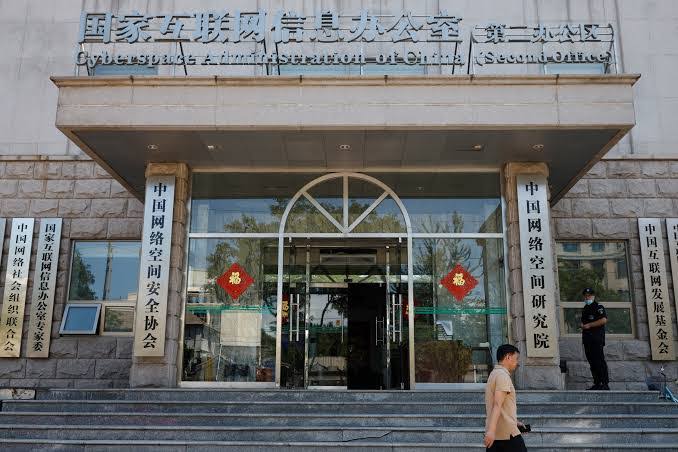
The country’s cyberspace regulator, the Cyberspace Administration of China (CAC), announced the closure of over 100,000 online accounts in the past month alone.
These accounts were found to be misrepresenting news anchors and media agencies, thereby spreading misinformation.
The CAC’s special initiative aims to cleanse the internet of misleading information, with a particular focus on social media accounts responsible for disseminating “fake news” and impersonating state-controlled media.
Since April 6, the regulator has successfully removed 107,000 accounts belonging to counterfeit news units and news anchors.
Additionally, a staggering 835,000 instances of fake news have been eliminated.
This intensified cleanup campaign coincides with a global struggle against the proliferation of fake news online, prompting various countries, including China, to introduce legislation to penalize offenders.
Notably, China already maintains tight control over news dissemination on its social media platforms.
Platforms like Weibo, similar to Twitter, prioritize hashtags generated by state media while censoring hashtags related to sensitive topics, even if they gain viral traction.
According to the CAC, their investigation uncovered accounts that masqueraded as authoritative news sources by fabricating news studio settings and imitating professional news presenters.
Artificial intelligence (AI) technology was employed to create deceptive anchors, misleading the public.
The fake news identified through this review encompassed popular subjects such as social incidents and international current affairs, as stated in the CAC’s announcement on Monday.
The CAC has pledged to guide online platforms in safeguarding the majority of internet users’ legitimate rights and interests by providing them with reliable and accurate news.
The regulator also encourages users to report instances of counterfeit news and misleading anchors.
China’s government has frequently implemented comprehensive measures to cleanse the internet of inappropriate and offensive content, considering them a threat to public welfare and business interests.
Recently, the CAC made a commitment to crack down on malicious online comments that tarnish the reputation of businesses and entrepreneurs.
Furthermore, the emergence of nascent generative AI technology, such as ChatGPT, has raised concerns.
In Gansu province, a man was apprehended for allegedly utilizing ChatGPT to fabricate a false story about a train crash, highlighting the need for increased caution in this realm.