
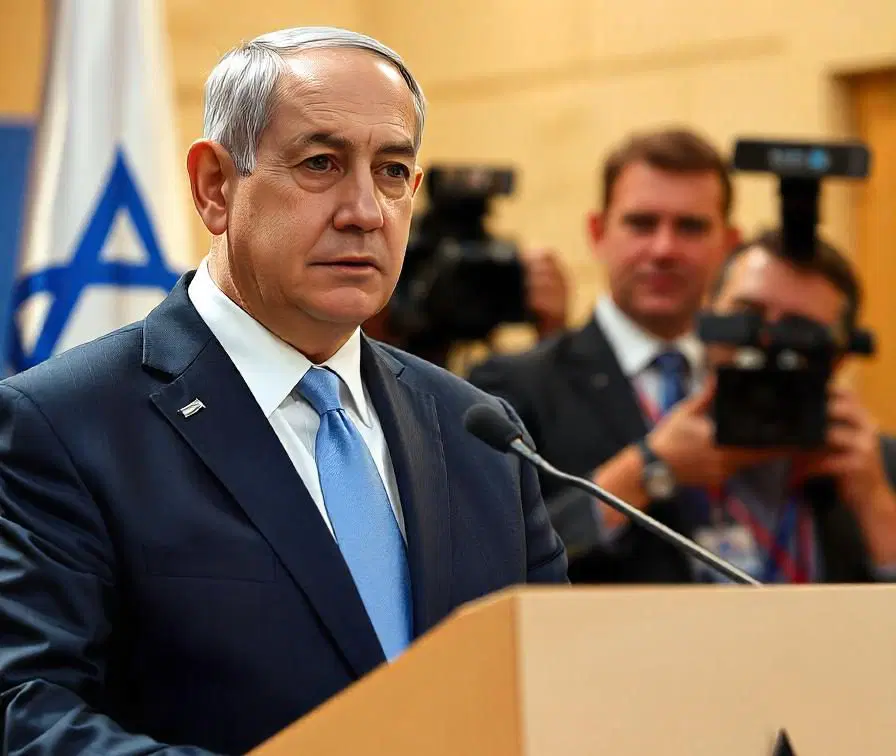
Israeli Prime Minister Benjamin Netanyahu has appealed to the International Committee of the Red Cross (ICRC) to urgently assist hostages held by Hamas in Gaza, following the release of disturbing videos showing two Israeli captives visibly frail and emaciated.
Netanyahu made the appeal during a call with Julien Lerisson, the ICRC’s regional coordinator, asking the humanitarian body to help provide food and immediate medical attention to the hostages. His office described the plea as part of broader efforts to galvanise international support for their release.
The Red Cross responded with a statement expressing deep concern over the footage, which it described as “harrowing,” and renewed its long-standing call for access to all hostages. It is unclear if the organisation has been granted access to any captives since the war began.
Hamas’s armed wing, the Al-Qassam Brigades, responded late Sunday, stating it would allow Red Cross visits—but only if Israel opens “humanitarian corridors” to allow food and aid into the entire Gaza Strip. The group insisted it does not deliberately starve hostages, but maintained that prisoners would not be prioritised over what it described as the “besieged and starving” civilian population.
The videos released in recent days have provoked widespread shock in Israel and abroad. In one, Evyatar David—one of the two hostages shown—was seen digging what he claimed was his own grave. Both he and fellow captive Rom Braslavski appeared visibly weak, further fuelling calls for renewed diplomatic efforts to secure a ceasefire and release deal.
“These images are appalling and expose the barbarity of Hamas,” said EU foreign policy chief Kaja Kallas. In a post on X, formerly Twitter, she urged the militant group to disarm and surrender political control of Gaza—echoing calls recently made by Arab mediators including Qatar and Egypt.
The Israeli government has identified 49 hostages still held in Gaza, including 27 believed to be dead. Most of the original 251 hostages taken during the October 7 attacks were freed during brief truces in late 2023, in exchange for Palestinian detainees held in Israeli prisons.
Over the weekend, tens of thousands of Israelis rallied in Tel Aviv to press the Netanyahu government for action. The prime minister, who met with families of the hostages, said he was “profoundly shocked” by the new videos and assured them that efforts to bring all captives home were ongoing.
An emergency session of the UN Security Council is scheduled for Tuesday to discuss what Israel’s ambassador described as the “dire situation of the hostages.”
But as pressure mounts on both sides, the humanitarian situation in Gaza continues to deteriorate. Aid groups and UN officials have accused Israel of heavily restricting the flow of food, fuel and medicine into the enclave. Much of the limited aid that does enter is often seized or scattered in the chaos, leaving many Palestinians to risk their lives in search of survival.
On Sunday, Gaza’s civil defence agency reported that nine civilians were killed near Rafah when Israeli troops allegedly opened fire on people queueing for food at a distribution site operated by the Gaza Humanitarian Foundation, a US- and Israeli-backed initiative. A witness at the scene told AFP that “no one posed any threat” to the soldiers.
Additional fatalities were reported elsewhere: five more civilians were killed near another aid site in central Gaza, and five others died in separate Israeli strikes, according to local officials. The Israeli military said it was not aware of an attack near the Rafah site and did not comment further.
The Palestine Red Crescent Society also said one of its staff members was killed in an Israeli strike on its headquarters in Khan Yunis. That claim could not be independently verified.
The conflict, now in its tenth month, began with Hamas’s unprecedented assault on southern Israel on October 7, in which militants killed 1,219 people—mostly civilians—and took hundreds hostage, according to official Israeli figures.
In response, Israel launched a full-scale military campaign in Gaza, which the Hamas-run health ministry says has killed at least 60,430 people—figures the UN considers credible, though difficult to verify due to access limitations and ongoing hostilities.
Efforts to broker a lasting ceasefire remain elusive, as talks mediated by Egypt, Qatar and the United States stall over key demands, including hostages, territorial control, and disarmament of Hamas.
For now, the fate of those still held in Gaza hangs in the balance