
South Africa is scrambling to secure new trade partnerships across Africa and Asia as it faces the threat of a sweeping 30-percent tariff from the United States, a move officials say could cost the country as many as 30,000 jobs and deepen economic strain.
The tariff—expected to take effect later this week—is the highest imposed by the U.S. on any sub-Saharan African nation and has triggered urgent diplomatic efforts in Pretoria, where senior officials argue the sanctions are unjustified and potentially devastating.
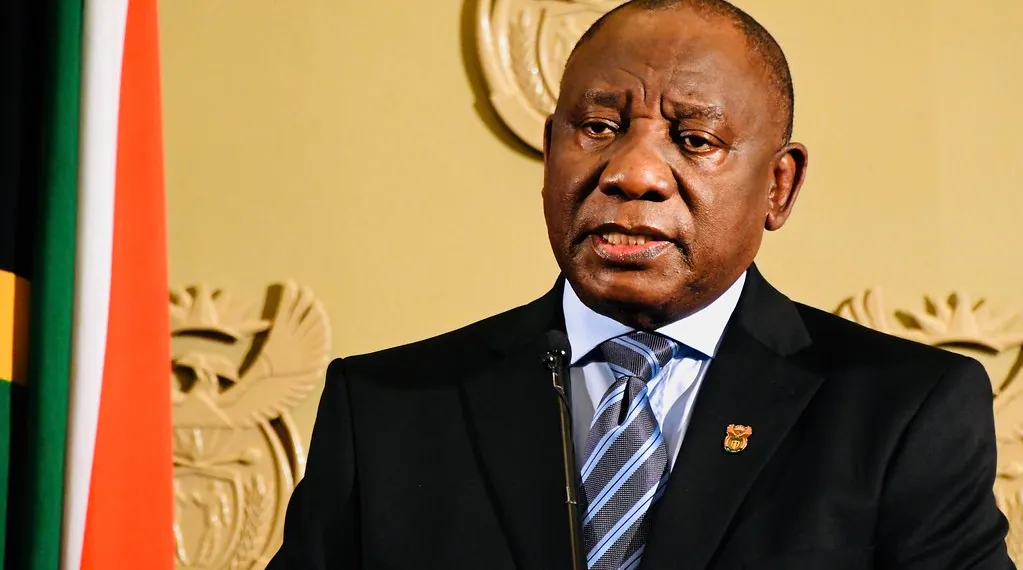
“Our foremost priority is protecting our export industries,” President Cyril Ramaphosa said in his weekly newsletter on Monday. “We will continue to engage the U.S. in an attempt to preserve market access for our products. But we must also accelerate diversification, especially by deepening intra-African trade.”
Tensions between Washington and Pretoria have worsened in recent months, fuelled by diplomatic rifts over both international policy—including South Africa’s legal challenge against Israel at the International Court of Justice—and domestic positions perceived as increasingly oppositional to U.S. interests.
The United States remains South Africa’s second-largest trading partner after China. Officials said the tariff would primarily impact the agriculture, automotive, and textiles sectors—although about 35 percent of exports, including copper, semiconductors, and critical minerals, would remain exempt.
A Calculated Blow
The economic damage could be substantial. The South African Reserve Bank recently projected up to 100,000 job losses due to the tariff. However, Trade Department Director General Simphiwe Hamilton offered a more conservative—but still alarming—estimate of 30,000.
Foreign Minister Ronald Lamola noted that the final impact on GDP growth could range from marginal to severe, depending on how quickly alternative markets are secured. First-quarter growth was a mere 0.1 percent; forecasts suggest the tariffs could shave another 0.2 percent from that.
Despite South Africa’s attempts at compromise—including offers to increase imports of U.S. liquefied natural gas and agricultural goods, and to invest in American mining and recycling sectors—talks have so far failed to yield a resolution.
Lamola described the U.S. position as “inscrutable,” noting that South African goods make up just 0.25 percent of total U.S. imports. “South Africa poses no trade threat to the U.S. economy nor its national security,” he said.
He also stressed that agricultural exports from South Africa are “counter-seasonal”—meant to fill gaps in the U.S. market, not displace domestic produce.
Domestic Criticism and Strategic Realignment
At home, Ramaphosa’s government has come under fire for its perceived diplomatic missteps, particularly among coalition partners who argue Pretoria’s mismanagement of U.S. ties has left key industries vulnerable.
The row follows a series of souring moments in the bilateral relationship. In March, Washington expelled South Africa’s ambassador following his criticism of the Trump-era “Make America Great Again” movement.
In response to the latest escalation, Pretoria has established a support desk to help exporters and producers explore new markets, particularly in Asia, the Middle East, and within Africa. Ramaphosa also reaffirmed his administration’s commitment to the African Continental Free Trade Area (AfCFTA), seen as a long-term solution to overreliance on Western markets.
Meanwhile, the U.S. has announced a separate 15-percent tariff on exports from several other African nations, including Lesotho, which had earlier faced the threat of a 50-percent levy.
South Africa’s officials remain hopeful that diplomatic backchannels will deliver a reprieve, but with Washington showing little appetite for concession, the country appears poised to pivot its economic future toward new—and less politically volatile—global partners.