
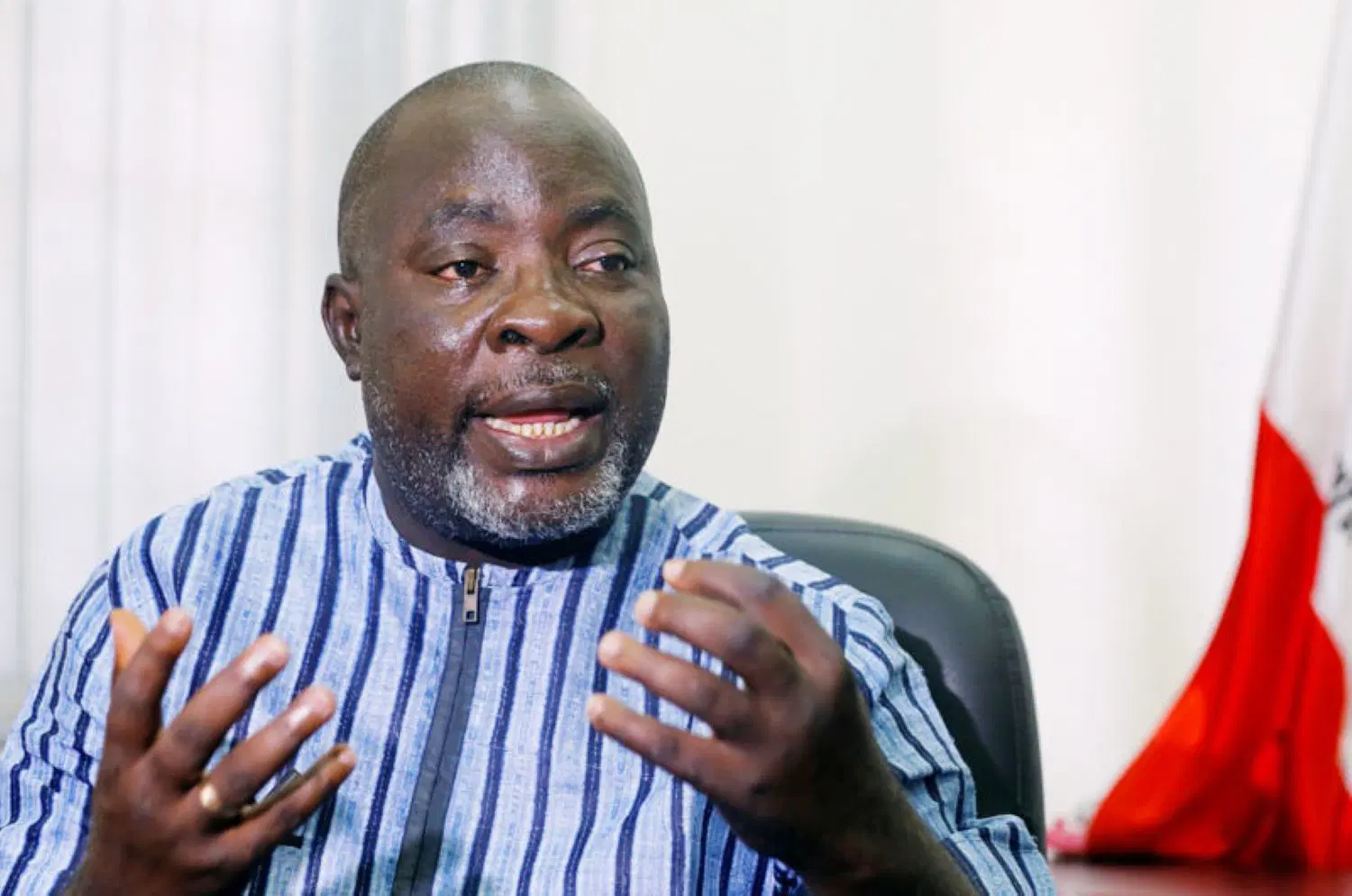
Amid growing tensions within Nigeria’s political landscape, a senior figure in the Peoples Democratic Party (PDP), Kola Ologbondiyan, has alleged that governors elected under the opposition party are facing mounting pressure to defect to the ruling All Progressives Congress (APC).
Speaking on Channels Television’s Sunrise Daily on Tuesday, Ologbondiyan linked the recent defections of Delta State Governor Sheriff Oborevwori and Akwa Ibom Governor Umo Eno to what he described as political harassment—part of a broader effort to weaken the PDP ahead of the 2027 general elections.
“Whether they can openly say it or not, our governors are being humiliated and harassed into abandoning their party,” Ologbondiyan said. “They are being forced into the APC.”
The comments came in the wake of a closed-door meeting brokered by President Bola Ahmed Tinubu on Sunday, which brought together suspended Rivers State Governor Sim Fubara and his estranged political godfather, Minister of the Federal Capital Territory, Nyesom Wike. The once-feuding duo emerged smiling for cameras—a gesture that, to many observers, signalled the President’s expanding influence in PDP-dominated states.
The reconciliation followed months of political unrest in Rivers, culminating in Tinubu’s controversial declaration of a state of emergency in March. That decision saw the suspension of Fubara, his deputy Ngozi Odu, and the entire state House of Assembly—an unprecedented federal intervention in a state-level crisis.
While the PDP has been slow to publicly challenge the President’s involvement, Ologbondiyan acknowledged that Tinubu’s successful mediation represents a political loss for the opposition. “Let’s be honest—what happened in Rivers was a blow,” he said. “But what matters now is how the PDP moves forward.”
Dismissing claims that the PDP’s internal troubles were the main drivers of the recent defections, Ologbondiyan argued that the narrative overlooks what he described as a calculated campaign of intimidation by the APC.
He called on PDP leadership to shift focus from the fallout in Rivers to a broader strategy aimed at preventing further attrition. “We need to look beyond Rivers and protect the integrity of our elected governors. If we don’t, 2027 could come faster than we’re ready for.”
As Nigeria’s political chessboard begins to rearrange itself for the next election cycle, the PDP finds itself grappling with an uncomfortable question: are defections merely ideological, or are they being engineered from above?