
White House to host Thursday announcement of first bilateral pact since Trump’s “Liberation Day” tariffs, though analysts warn true scope may be modest.
The Biden administration and Downing Street are poised to announce a preliminary trade agreement on Thursday, marking the first US–UK deal since President Trump imposed a baseline 10 percent tariff on all imports on April 2—dubbed “Liberation Day”—and froze higher levies on many partners to allow negotiations to proceed.
White House sources told the New York Times and Politico that the pact will focus on tariff relief for key British exports—especially steel, aluminium and automobiles—in exchange for UK concessions such as scaling back its digital services tax on US tech firms. The Wall Street Journal, meanwhile, described it as a loosely defined “framework” rather than a full free-trade accord .
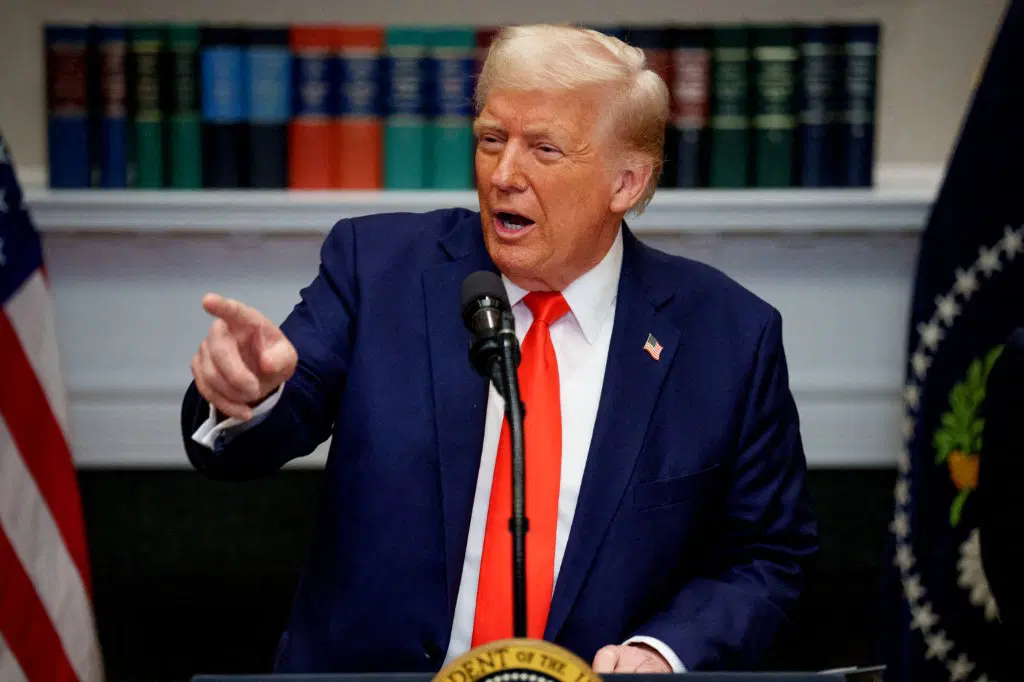
President Trump is scheduled to unveil the agreement at a 10 a.m. Oval Office briefing, touting it as “the first of many” trade deals. In London, Prime Minister Keir Starmer will provide his own update later in the day, affirming that detailed talks “have been continuing at pace” and pledging transparency on any pact’s terms.
A Deal of Damage Limitation?
Economists caution that the agreement is unlikely to restore pre-tariff trading conditions. Jonathan Portes of King’s College London characterised the pending deal as “damage limitation rather than an economic boost,” noting that even reduced duties may still exceed last year’s levels. Deutsche Bank analyst Jim Reid observed that while full trade treaties typically take years, a framework could nonetheless set a template for future negotiations—if the 10 percent baseline tariff remains a starting point.
For Britain, a swift deal with Washington carries political as well as economic weight. Securing a post-Brexit agreement with America has long been heralded as the “Holy Grail” of trade policy, and comes just ahead of an EU-UK summit on May 19 aimed at resetting ties with Brussels . Yet London may also find itself caught between competing blocs, as any US–UK pact could complicate its simultaneous talks with the European Union.
Broader Ripples and Next Steps
Trump’s tariffs have already spurred negotiations with more than 70 countries, including India and Japan, as the White House pauses steeper levies to drum up new agreements. While Washington and London prepare to seal their framework, both sides will face scrutiny over how far concessions go—especially on sensitive sectors like digital taxation, agriculture and public services.
For now, the US–UK announcement represents an early test of Trump’s aggressive tariff-for-deal strategy: one designed to leverage American market access in exchange for reciprocal trade liberalisation. Whether it delivers substantive gains—or simply paper over global trade frictions—remains to be seen.